





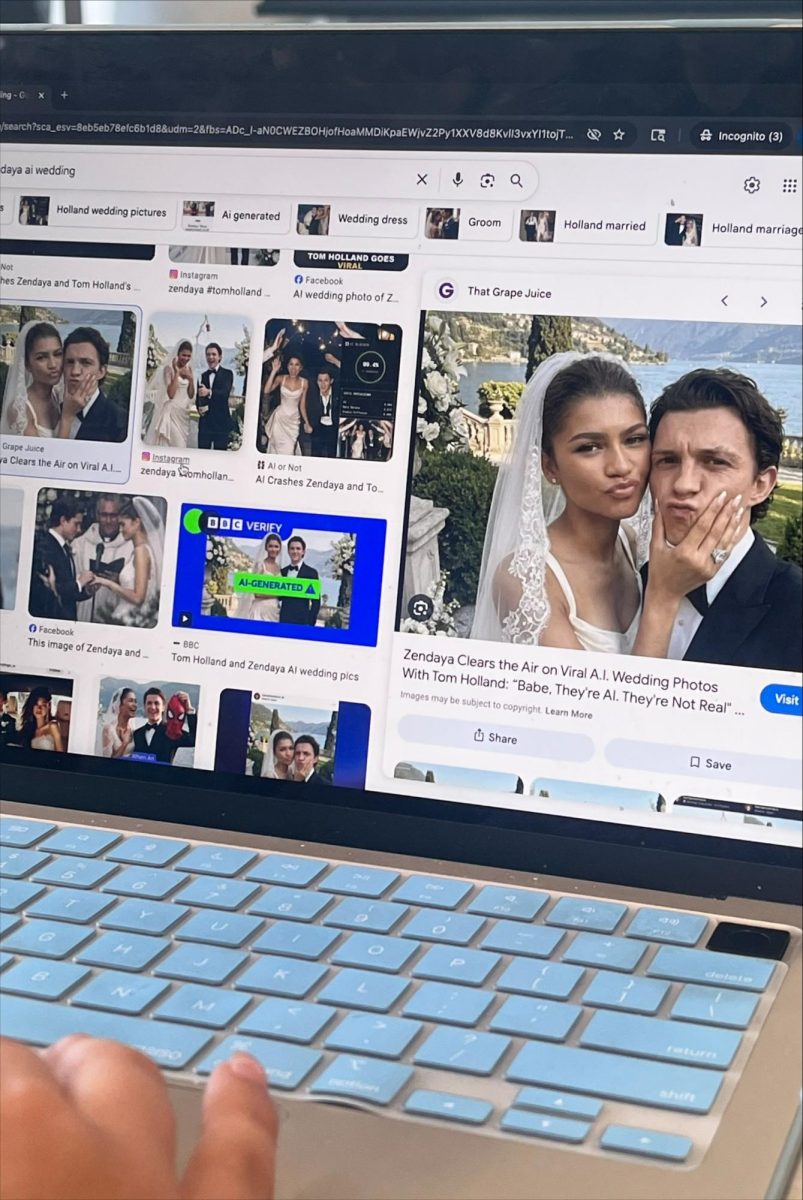

Recently, many fans have speculated that Zendaya and Tom Holland may be married. This has just been a dream for most fans until around early March this year when their “wedding photos” surfaced on platforms like TikTok, Instagram and Twitter. Only for fans to find out that these photos aren’t real at all and that they’re entirely AI. QUEST sophomore, Zeina Ali, when asked if she was fooled by these AI photos, said, “I was like, wait, is this real? It looked very realistic.”
Others felt the same, like PEACE freshman Emely Phillips who said, “It was convincing because [Zendaya] was in a wedding dress and had a huge ring.” Many others were convinced, but these photos aren’t the only thing responsible for the sudden speculation.
On March 1st, Law Roach, Zendaya’s stylist, was interviewed at the Actor Awards and was asked about how he would style Zendaya for her wedding, to which he replied, “Y’all the wedding already happened, y’all missed it.” This left fans wondering how they missed the clues.
QUEST sophomore Rhiley Wallace said, “In the interview he said it like it already happened, so people missed out and that’s why they created photos because they know they’re never getting the real ones.”
Many people thought the pressure of social media would encourage the couple to speak out to confirm or deny but nothing has happened. The couple is continuing their work and has remained silent since.


Annabelle Lawrence • May 18, 2026 at 1:58 pm
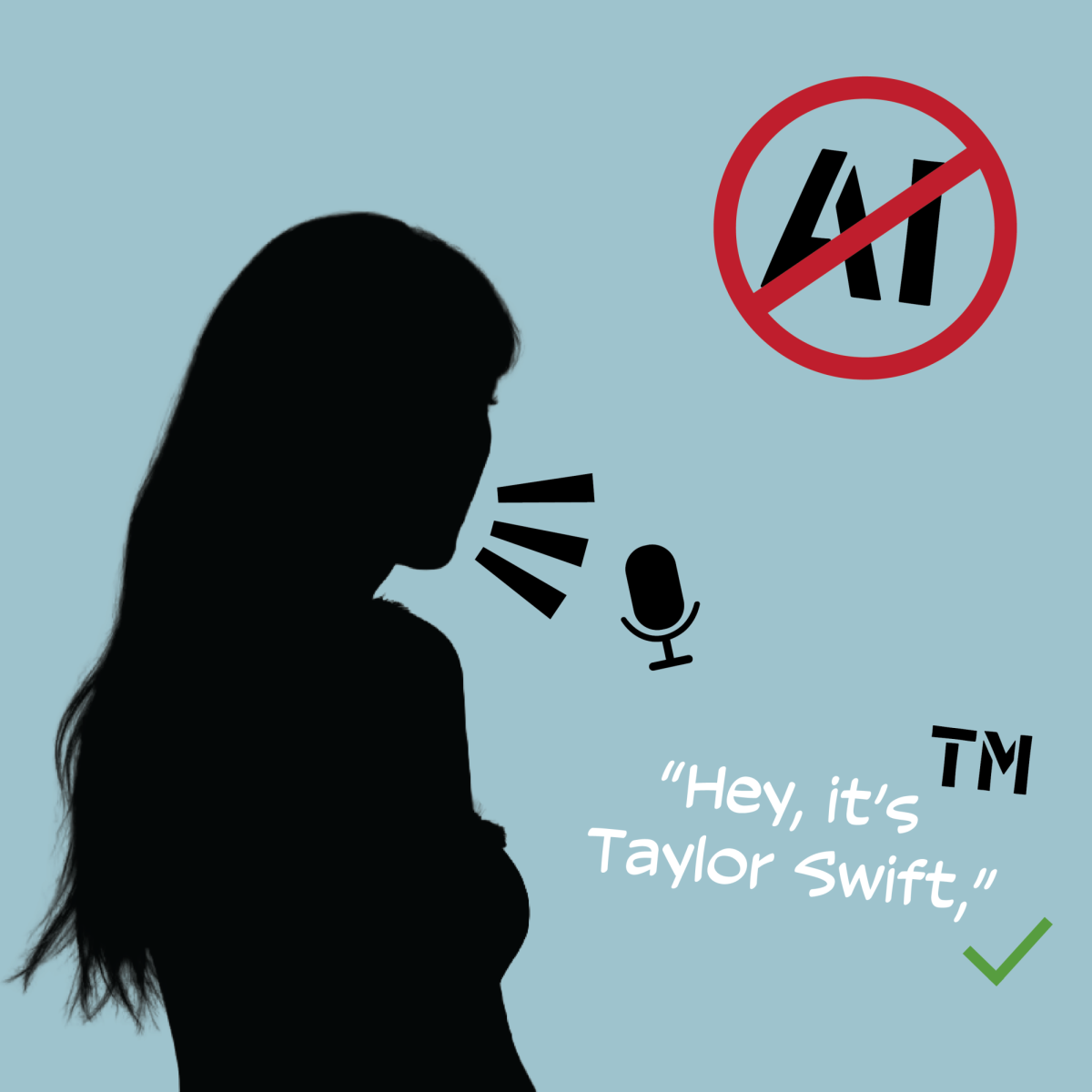
I was drawn to this article because I’ve noticed celebrity culture showing up on my feed. I really enjoyed Benekos’s take on parasocialism through her use of interviews. While I personally wasn’t fooled by these photos, I remember my friends asking if they were real. I related to Zeina Ali’s comment on how real the photos looked, because they give this uncanny feeling of being “too perfect.” Benekos’s article brilliantly situated a pop culture phenomenon in the context of the greater AI controversy. By focusing on one instance of AI violating the personal lives and images of celebrities, Benekos left me feeling empowered to play my part in stopping AI. While making fake photos may seem mundane, Benekos’s article portrayed how some people may be fooled into believing false information. AI isn’t a funny topic, it is a violation.