




















The United States is currently at war with Iran, a major political and military power in the Middle East, a conflict that has emerged from years of political tension and escalation. This comes following an attack done by Israel and the United States on Feb. 28, 2026, which left Ali Khamenei, Iran’s Supreme Leader of nearly 37 years dead along with many other high ranking members of the Iranian government and military.
The death of Khamenei came as a shock to much of the world, and has resulted in an escalating conflict between the United States and Iran. This conflict has contributed to strict Iranian control over the Strait of Hormuz in the Middle East, one of the busiest oil shipping channels in the world, with 20% of the world’s oil and natural gas passing through. This strict control has caused a steep increase in oil and natural gas prices worldwide.
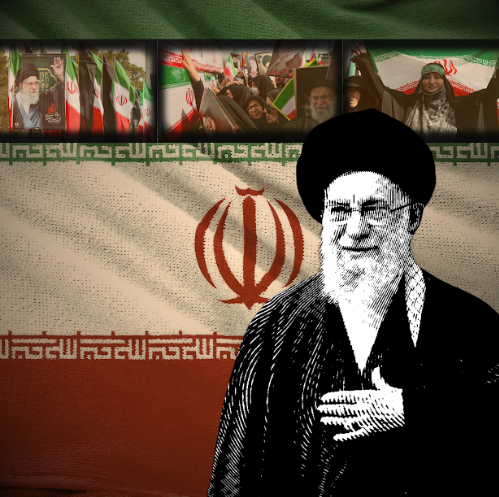
“Operation Epic Fury” which resulted in the death of Khamenei was carried out by the United States and Israel, and initially resulted in the deaths of around 200 people across Iran. Reports have shown that Khamenei was killed as a result of Israeli airstrikes, which began after sunrise, on Iran’s capital of Tehran.
Khamenei first came into power in 1989, following the death of the first Supreme Leader of Iran, Ruholla Komenhei, who took the position after the 1979 Iranian Revolution. Khamenei was then elected by the Assembly of Experts to be the next Supreme Leader of Iran, despite his lack of experience as a grand Ayatollah (a high ranking member of the Shia Muslim clergy).
Khamenei was a controversial figure in Iran and the rest of the world. Prior to his death, Khamenei’s regime faced controversy in early 2026 for violently suppressing rising protests across Iran following a severe economic crisis. These actions resulted in an estimated 7,000 civilian deaths and sparked worldwide condemnation.
“Khamenei’s regime, and the previous Ayatollah Komenhei…certainly they are not examples of democratic rule, certainly the way that they killed tens of thousands of protesters [at the beginning of 2026] was an example of their heavy handed tactics,” said Timothy Mulvehill, sophomore AP World History teacher. “Since the 1979 Revolution, this has been a regime that has supported organizations that the United States identifies as terror organizations,” he adds.
This condemnation of leadership is explained best in an article by the Guardian, which focuses heavily on Khamenei’s tenure as Supreme Leader of Iran, “Successive waves of unrest and reform efforts were met with surges of viscous repression alongside continuing harsh treatment of measures targeting women, gay people and religious minorities.” Additionally, “Overseas, Khamenei chose to invest heavily in the so-called axis of resistance – Hamas in Gaza, Hezbollah in Lebanon, the Houthi movement in Yemen, and a motley assortment of Islamic militant militias in Syria and Iraq.”
Khamenei’s support of groups such as Hamas, Hezbollah, and the Houthi movement pitted him against the United States and other western nations. Among a sea of other controversies such as human rights violations, Iran’s nuclear program became a major point of disagreement between the United States and Iran, and was ultimately a major contributing factor in “Operation Epic Fury”, which killed the supreme leader, as well as many other high ranking members of the Iranian government.
Following the death of Ali Khamenei, his son, Mojtaba Khamenei, has been elected to be the next supreme leader of Iran, making him the third person to hold the title, and marking the beginning of a new period for Iran.



Kellen Habig • May 18, 2026 at 1:38 pm
I clicked to read this article as I had an interest in the Iran War. I was surprised to read the various facts about US involvement and the late leader Ali Khamenei. Sammelius identifies the background of Khamenei and his relationship with the US. This was a great way to shed light on a part of the war that is not very focused on. Sammelius also shows how Iran and the US have protested his rule. However, what I think is a really good idea from Sammelius to include is a quote from the Guardian where they mention the tenure of Khamenei. This is important because it shows what others perspectives may be of Iran. He knows how much better attention should be given to Iran
I really enjoyed Sammelius’ article because he identifies the different facts of Khamenei that people including myself might not have been aware of. As well as giving information on how the Iran war is doing regarding US involvement and Khamenei’s death.
Julian Stout • May 18, 2026 at 1:18 pm
In the article, Sammelius does a great job at providing ample evidence and information regarding the background of Khamenei and the events leading up to his death. He also does a good job at keeping the article strictly factual and leaving all opinions on the topic out of the article. To add on, he quotes Mr. Mulvehill, a sophomore AP World History teacher, who was knowledgeable on the topic, which made him a credible source to implement into the article.
In the article, Sammelius also makes sure to address events both prior to and following the death of Khamenei, including the Ayatollah Komenhei, and the rising gas prices in the US following his death, and the war with Iran. To wrap up, Sammelius does a great job at structuring the article in such a manner that different sections of the article talk about different topics, as well as making overall sense.
Tyler Cover • May 18, 2026 at 11:38 am
On May 1, 2026, Oliver Sammelius wrote an article titled “Who Was Ali Khamenei?”. The article does a sublime job of providing background knowledge towards both the former Supreme Leader’s tenure and the controversies he faced. In a time where information is becoming increasingly incomplete and meant to fit one certain narrative, it is refreshing to be able to find a largely complete and worthwhile exploration of the former leader of Iran. Whether or not one believes that Operation Epic Fury was necessary, it has been no secret that many Iranians now believe that the future holds a much brighter tone than their past. Along with the context provided by Mr. Mulvehill, it reinforces that Khamemei’s regime was marked, not for the good of all Iranians, but for the good of those in power. Following the Iranian Revolution, Khamemei’s tactics were brutal in suppressing all public displays that went against his goals and his position, serving as a stark reminder of what all society, unfortunately, has the capacity to become.
However, the ‘Why?’ of the article interested me just as much as the article itself. So, like any good scholar, I looked into it. In a follow up with Oliver Sammelius, when asked if he was interested in the potential fallout of the drone strikes that killed Khamemei, he answered an emphatic “Yes”. Moreover, he relayed to me his fears that the death of Iran’s Supreme Leader could cause a prolonged war, or a sort of hunt for Islamic groups which the US classifies as terror organizations, akin to the wars in Iraq and Afghanistan started by former President George W. Bush. I find much agreement with his sentiment. In all, I find that the article provides an equally as interesting look into the past of Iran, as well as its possible future and its impacts on the world.
Sincerely,
Tyler Cover
Daniel Padilla Luna • May 18, 2026 at 9:38 am
On May 1, 2026, Oliver Sammelius wrote an article titled “Who Was Ali Khamenei?”. This article provides detailed context on the prior conflicts between the United States and Iran which led to the current war between the two countries. Sammelius’ detailed explanation of “Operation Epic Fury” and the motives behind it allow for readers to completely understand the reasoning of the attack, allowing for their own perspective on the matter. I appreciate his elaboration on specific terms that many readers may not know of, and the overall details displayed in the article.
Along with historical context, Sammelius also describes Khamenei and his time as Iran’s Supreme Leader. He mentions the regime of Khamenei and what he specifically stood by and supported, as well as the organizations such as Hamas and Hezbollah which he supported. These descriptions grant readers the opportunity to understand more reasoning for escalated tensions with the United States as they view these organizations as terrorist organizations.
All in all this article is very well written and permits for great understanding by readers. The details in the article provide context and give a proper explanation to why the countries are at war today.
Jacob Ekk • May 18, 2026 at 9:28 am
On May 18, 2026, Oliver Sammelius wrote an article titled “Who Was Ali Khamenei.” Sammelius explains how the war with Iran was a direct result of political tension and escalation. Sammelius explains that “an attack done by Israel and the United States on Feb. 28, 2026…left Ali Khamenei, Iran’s Supreme Leader of nearly 37 years, dead with many other high-ranking members of the Iranian government and military”. He further explains the background of Khamenei and what led to his assassination. Moreover, Sammelius uses this information to explain why the Strait of Hormuz has been controlled by Iran, limiting the amount of oil and natural gas passing through. This is catastrophic to the global economy, as gas prices have risen, affecting people and businesses worldwide. I appreciate the fact that Sammelius also included a perspective from Mr. Mulvehill, who is knowledgeable in world politics and history. Overall, this article makes the conflict between the United States and Iran much clearer and easier to comprehend.
Matteo Palma • May 18, 2026 at 9:26 am
This article was an incredibly informative piece on the current situation in terms of the US’ foreign policy concerning Iran. It was able to give me information on the former leader of Iran Ali Khamenei as well as how the US has handled the situation thus far. He also includes the influence that this battle has had on the world, as the Strait of Hormuz is a critical choke point that is restricting global trade. Sammelious does a great job finding a credible source that has a stance on the topic, as Mr. Mulvehill is an AP world history teacher. He is able to relay some of his own insight while Sammelious remains unbiased and simply reports the facts on the current situation and what it will look like going forward. My one critique of this article is some grammatical errors and long sentences, but apart from that Sammelious did a great job on reporting about such an important topic in today’s world.
Avery Paul • May 15, 2026 at 1:56 pm
Dear Corydon Editor,
On May 1, 2026, Oliver Sammelius wrote an article titled “Who Was Ali Khamenei?”, which summarizes Iran’s complex history with the US and sheds light on its most prominent political leader. Sammelius recounts ongoing events, including the US war on Iran, and the situation in that country directly before the conflict. This initial outline helps readers who may be confused about the situations they may be watching unfold on the news. The author then recapitulates the actions of Ali Khamenei through his time as the supreme leader of Iran, from 1989 to the present. With his killing in 2026, during a US strike, Sammelius explains the American motive for conducting such an operation, including the mass repression of protestors at the beginning of the year, where thousands died. A quote from Millikan history teacher, Timothy Mulvehill, is an important addition, revealing the perspective of someone with the historical knowledge to analyze the events and their connections to the past. Sammelius also references an article from the Guardian about the general situation in Iran and its relations with the outside world. At the end of the article, he references a “new period” for Iran, which suggests that developments will continue. Overall, this piece helpfully outlines the key, need-to-know players and events of the US-Iran war, and acts as a starting point for further research.
Sincerely,
Avery Paul
Cesar Gomez • May 15, 2026 at 1:31 pm
On May 1, 2026, Oliver Sammelius wrote an article titled “Who was Ali Khamenei?”. The article provides a detailed explanation of the growing conflict between the United States and Iran and effectively explains how years of tension led to the current situation. One strength of the article is how it combines historical background with current events, helping readers better understand why the conflict has become so significant. The discussion of Ali Khamenei’s leadership, Iran’s nuclear program, and the Strait of Hormuz gives important context and shows how the situation affects not only the Middle East but also the global economy. Including quotes from both a teacher and an outside news source strengthens the article and adds credibility to the information being presented.
I also appreciated how the article explained the political transition following Khamenei’s death and connected it to a possible new era for Iran. The writing remains informative while still being understandable for readers who may not know much about Middle Eastern politics. The article made me think more about how international conflicts can quickly impact countries around the world through oil prices, military alliances, and political instability. Overall, the article is informative, well-organized, and raises important questions about what the future relationship between Iran and the United States might look like moving forward.