

























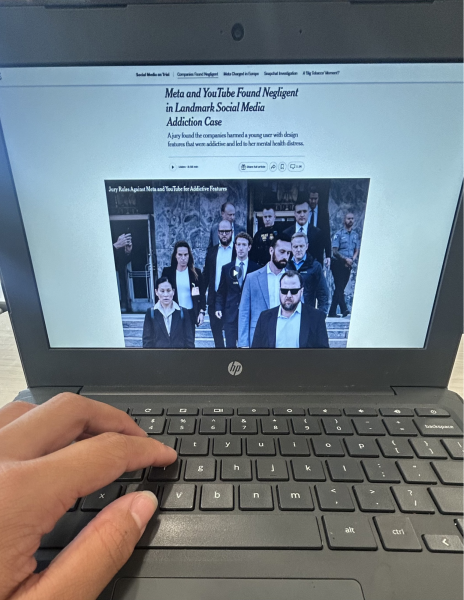
On March 24, 2026, and March 25, Meta was found guilty on charges of purposefully designing their platform to be addictive and exposing children to sexual exploitation.
New Mexico jurors ordered Meta to pay $375 million with the California case following soon after, where Meta was required to pay a settlement of $6 million in compensatory and punitive damages.
The New case, filed by Attorney General Raúl Torrez in 2023, was based on an undercover operation, where decoy accounts posing as minors were continuously contacted by child predators on Meta’s platforms.
“State prosecutors showed internal Meta research that, at one point, found 16% of all Instagram users had reported being shown unwanted nudity or sexual activity in a single week,” stated Kali Hays in her BBC article.
Prosecutors presented documents that largely suggest Meta executives understood their platforms presented a significant risk to children, but fell short when implementing safety regulations to protect children from exploitation.
This culminated in the final verdict of Meta, which owns Instagram, Facebook, and WhatsApp, being held liable for misleading users over the safety of their platform, in a landmark win against a tech giant.
Meta was also hit with an additional trial on March 25, where they were accused and found accountable by a California jury for the depression and anxiety of a woman who had repeatedly used social media since childhood.
With the plaintiffs’ lawyer focusing on how social media platforms are strategically programmed to be addictive; with features like infinite scrolling, personalized algorithms, and autoplay, executives knowingly failed to protect young users.
“In both trials, there was evidence that the companies knew about the harmful effects that their products had on children,” explains PEACE Principles of Law teacher Mr. Reynolds. Reynolds continued, “These companies knew their product was harmful or had the potential to harm kids, they also knew it was addictive, and intentionally created these products to be addictive.”
The result of this case could influence future trials, with the lawyers involved in the case viewing the Los Angeles verdict as a favorable indicator of great change in the social media landscape.



Landon Applegate • May 18, 2026 at 11:04 am
Terrazas did an excellent job highlighting the landmark verdicts against Meta, and the article’s inclusion of Mr. Reynolds’ perspective added meaningful context for student readers.
What stands out most is that Meta’s own internal research revealed 16% of Instagram users reported being shown unwanted sexual content in a single week, yet executives still failed to act. The New Mexico and California verdicts, totaling hundreds of millions in damages, signal that courts are finally holding these companies to a standard that protects children over profits.
I liked how the author pointed out that these platforms were deliberately engineered to be addictive. Infinite scrolling and personalized algorithms were not accidents and instead they were calculated decisions made at the expense of young users’ mental health and safety. The California verdict connecting social media use to depression and anxiety in a young woman should concern every parent and student.
Samantha Camberos • May 18, 2026 at 9:20 am
After reading the article, I learned that lawyers were accusing Meta of exposing children to sexually exploitative material while also being purposely designed to be addictive. I can relate to this article because I have definitely seen sexually explicit material on numerous social media platforms. I have also felt that being on social media can be addicting at times, and it can be difficult for me to get off of those apps. I appreciate how the author took these concerns into account and inserted quotes from experts in order to help the reader gain a full understanding.
Additionally, I appreciate how the author included an interview from Mr. Reynolds, a teacher at Millikan. The use of the interview helps the audience better connect with the issue at hand. However, one of my suggestions would be to explain what Meta is. I am sure that a lot of people, including myself, are not familiar with Meta. Explaining the purpose of Meta would help the audience recognize how Meta is intertwined with social media, and how it affects the content they consume.
Overall, this article was very well written and informative. I applaud the author for discussing the impacts of social media, and how it is addictive for people, especially minors. Also, I admire the author for including numerous reliable sources throughout the article, including quotes from the BBC. In conclusion, I was very impressed with this article and I learned a lot from it.
Zoe Miller • May 15, 2026 at 1:40 pm
I was unaware of these recent lawsuits, and I think the article did a great job of covering all of the details and background behind this incident. It was written in a way that can allow people to understand these lawsuits even without knowing much about Meta, as the information provided within this article is extensive.
The harmful effects of social media is a topic I have studied both in and outside of schoolwork, but it is surprising to see a company held accountable for the harmful ways it has designed its social media platforms. I am unsurprised, however, that Meta did it deliberately and ignored the concerns that some users had voiced.
All in all, this article was very informative and well-detailed. I appreciated the quotes from an article and from an interview with one of Millikan’s staff members, and I feel like the article caught me up with this situation.