























In a city defined by ocean breezes and urban energy, it’s quite easy to overlook the quiet residents of Long Beach: the reptiles. They thrive in places like Signal Hill, nature reserves, local parks and even into our own backyards. Though often misunderstood, these animals play an important part in the city’s natural ecosystem.
Rather than viewing reptiles with fear, Long Beach residents should view them as quiet allies, essential creatures
that support environmental health, protecting them means protecting the broader ecosystem as a whole.
Ms. Cox, the 9th grade Biology teacher for SEGA and 10-12th grade AP Biology teacher for all pathways has stated that “…most negative interactions with them come about from misunderstanding. We’re in their territory and they think we’re dangerous, so snakes and others may lash out and bite us, but it’s a defense mechanism for them.”
Fear is often taught, stemming from parents teaching their children, cultural misconceptions, and the disgust of what is not known. More often than not, leading to unnecessary mistreatment and judgement of reptiles as a whole.
Delilah Ostick-Perez a senior in QUEST mentioned, “It’s how people see them and how people have been taught to see them, the mentality is the issue.”
Common species that can be found Long Beach include the Western Fence Lizard or more commonly known as the “Blue-Belly Lizard”, Southern Alligator Lizard, California Kingsnakes, Pacific Gopher Snakes, Two-Stripped Gardener Snakes, and the very well known Pacific Rattle Snake.
“Snakes on a trail: Tips for hiking in rattlesnake country” written by Stephen Nett and published by the Sonoma County Regional Parks expressed, “Don’t pick up or get close to snakes. Make sure you can see where you plan to step or put your hands. Step on, not over, large rocks or logs. Stick to trails, avoid tall grass and heavy underbrush where snakes may shelter out of the heat. Wear long pants and sturdy shoes. Don’t wear sandals in bushy, wild areas. Rattlesnakes can swim, so be careful about grabbing what look like sticks or branches in lakes and rivers.”
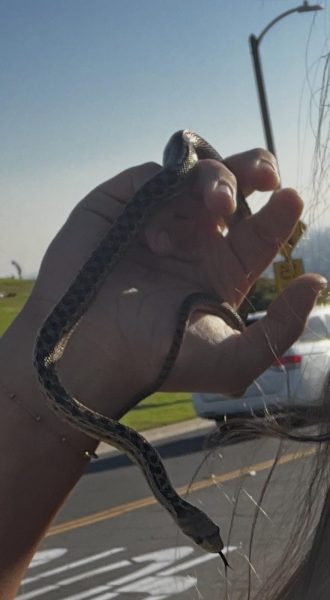
As of right now it’s rattlesnake season in Southern California following the months of April through October as winter subsides and Spring follows Fall. Although they pack a deadly and venomous bite, they’re generally docile and very passive animals only striking in self defense. You’ll hear rattlesnakes before you see one, they act as vital predators, only using venom as a last resort because it’s extremely demanding metabolically to produce, and is intended for hunting.
Reptiles provide a natural pest control that benefits both people and the environment. Lizards eat insects and vegetation, while snakes reduce rodents and mice populations which could otherwise spread disease and cause property damage to homeowners. By maintaining this balance, they help support healthier ecosystems in Long Beach.
Despite that, these reptiles are often still very intimidating to people. In reality, most species in Long Beach are completely harmless and prefer to avoid humans altogether. In learning to recognize species and understand them, it can help reduce that fear.



Nina • May 18, 2026 at 1:16 pm
I really appreciated seeing an article about our environment in the Corydon. This article was very educational, and I liked that it included a quote from Stephen Nett, an author who published a book with the Sonoma County Regional Parks about hiking safety with snakes. This quote offered surprising information that I wasn’t aware of, like how rattlesnakes can swim. Another quote was also included from the Millikan AP Biology teacher, which made the article feel more well rounded.
Additionally, I like how this article advocated for people to be more conscious of their environment. I thought that the phrase “fear is often taught” was especially impactful at the beginning of the article. Near the end, I also appreciated how Jade defended rattlesnakes by saying that when they do use venom, it is in self defense. I think that his article will help people appreciate our environments and its inhabitants more by letting them know the facts.