














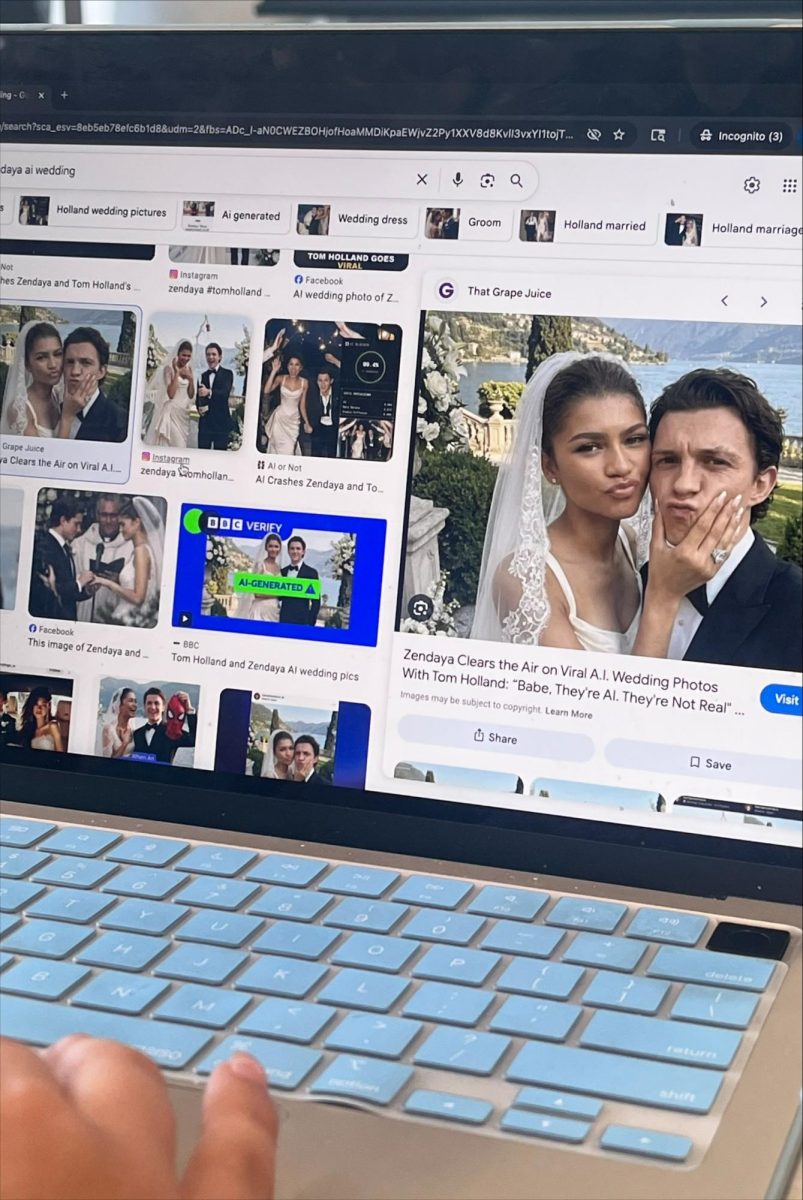



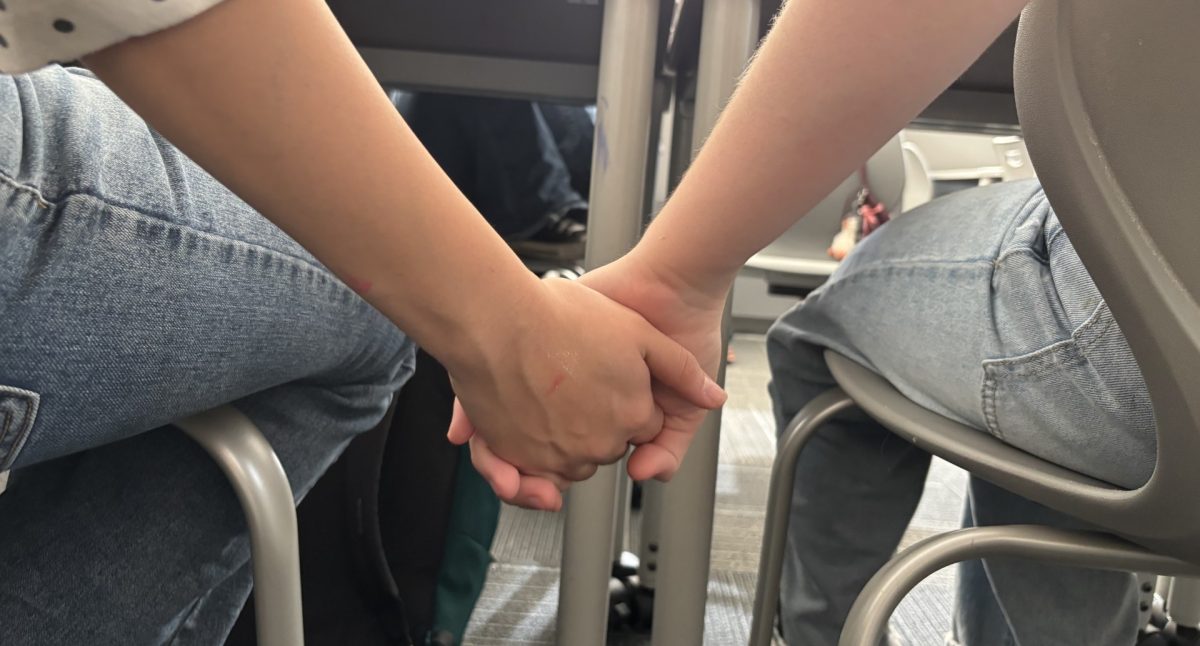
Think about your favorite show, movie or book: think of those two characters that were just perfect for each other romantically that you rooted for from beginning to end. Maybe they happened, maybe they didn’t, so you hop onto social media to consume any fanart, fanfiction or edits of them that you can find.
One of the most popular aspects of fandom culture is shipping. Shipping involves fans encouraging two characters to become romantic partners. Some examples include Draco Malfoy and Hermione Granger from Harry Potter, or Mike Wheeler and Will Byers in Stranger Things.
Tracy Beaton, a sophomore in QUEST, explains, “I think shipping actors and other celebrities can be cute and creative…however I don’t support when people take it too far with these celebrities.”
Shipping can be harmless, but it gets dangerous quickly when fans forget their favorite characters are just that, characters. When fans begin to project their desires onto actors, boundaries are crossed, online toxicity ensues, and the thin curtain of privacy actors attempt to maintain is ripped away.
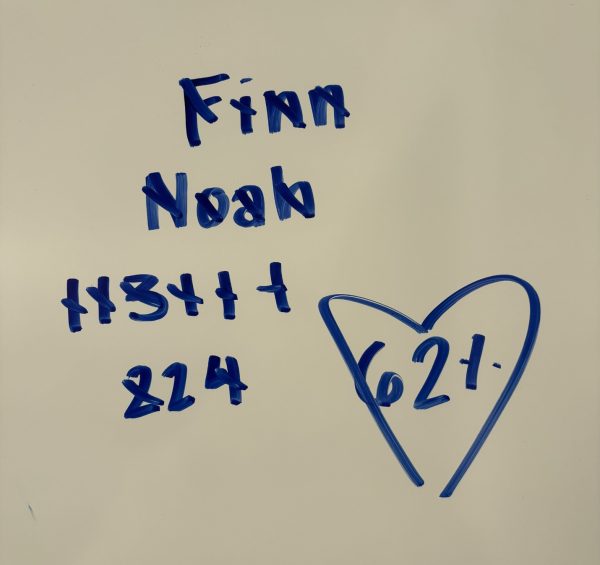
A very recent example of this is Finn Wolfhard and Stranger Things co-star Noah Schnapp. “Foah” (Finn x Noah) has grown in popularity as fans are moving from their character’s on-screen ship (Byler) to shipping the actors themselves. From over-analyzing interviews, to making edits of their interactions, the line between people and character has officially been blurred.
Fans are not entitled to interfere with their favorite actor’s personal relationships. The prying behavior of fans has harshened relationships between Outer Banks (OBX) actors Madison Bailey and Rudy Pankow, who play a couple on the show; fans shipped the actors alongside their characters. This resulted in online harassment to Bailey and Pankow’s partners, and watchers noticed tension between the pair while watching OBX Season 4.
Psychology teacher Ms. Hines offers some insight on why fans get so involved, explaining, “Social Identity Theory suggests that fandom allows for a sense of belonging. The study suggests that this status gives people a sense of purpose and sometimes they engage in something called “white knighting” or protective behavior toward those who they are fans of.”
It is crucial to separate actors and the characters they play, their lives are not a part of the entertainment. Shipping can be wholesome and nontoxic when you keep it strictly fictional. With that in mind, my current favorite ship is actors and privacy (and Byler).



Olivia Chire-Hernandez • Feb 17, 2026 at 11:14 am
On January 27, 2026, Aubrey Calderon wrote an article titled “Ship or Dip: Actors and Privacy”. With the recent release of Stranger Things season 5, I’ve noticed increasingly more shipping happening between the characters Will Byers and Mike Wheeler, as mentioned by the author. As fans are even more attentive to this series, being the season finale of Stranger Things, fans intervening in character’s romantic relationships may be entertaining but can end up being excessive. Author Aubrey Calderon writes on this opinion by giving a background on the meaning of shipping and how it has gone past a fictional level and into the actor’s personal lives. Specifically, I found it interesting how Calderon’s article provided a real life example of how shipping has intervened in the lives of actors Madison Bailey and Rudy Pankow from the Netflix series Outer Banks. Not only was the shipping of these two actors taken out of context, it also caused conflict in the relationships of their own. Furthermore, I also appreciated how Calderon included an interview from teacher Ms.Hines who responded from a psychological perspective. The interview details psychological theories and how they apply to these fandoms. Overall, this article gives valuable insight on the meaning of shipping actors and how it can become excessive when interfering in their personal lives.
Kaya Sangkarat • Feb 4, 2026 at 11:56 am
With the recent surge of Stranger Things hype, there have been several conversations surrounding the dynamic between the actors. However, it is important that it is emphasized to fans that actors are people too. Calderon accurately calls for an increase in respect for the actors and their very real relationships. While high schoolers and general fans can all get too wrapped up in fandoms, Calderon emphasizes the importance of understanding that actors are more than the characters they portray. While it can be fun to get wrapped up in a series or a fictional world as a whole, it’s vital that fans understand the harm caused by fan involvement, rumors, and speculation in the actors’ real lives. Calderon does a great job of relating to fellow “Byler” fans while also arguing for an increase in respect for actors despite heavy involvement in the show’s development. All in all, this was a fantastic article that accurately and kindly reminds fans to remain respectful of real people with real lives.
Sincerely,
Kaya Sangkarat
Olivia • Feb 3, 2026 at 1:51 pm
This article addresses the impacts of “shipping” and how, once a simple idea, it has evolved to become a bigger issue. I like the examples Calderon used to provide background on shipping, such as Draco Malfoy and Hermione Granger from Harry Potter, and Mike Wheeler and Will Byers in Stranger Things (Calderon, 1). Not only do these examples add credibility to Calderon’s description of shipping, but they also connect with her audience, given that these “fan-made” relationships stem from two extremely popular series.
Additionally, I liked the way Calderon used quotes within her article as evidence explaining what shipping is and why it has progressed to such drastic measures. With this being said, I suggest only using credible sources for her evidence/quotes. I feel the inclusion of Tracy Beaton was unnecessary solely because a QUEST student doesn’t carry much credibility. In contrast, I really liked the way Calderon used Mrs. Hines as a source of evidence, given that she is an AP Psychology teacher and has credentials that strengthen her point of view on the over-involvement of fans in actors’ love lives. Hines’ use of psychological terms such as “Social Identity Theorem” and “white-knighting” is a great addition to the article, providing an explanation and context for why “shipping” has gone so far.
Finally, I enjoyed the way Calderon concluded her article because while still maintaining an informative tone, she ended on a light-hearted note, “With that in mind, my current favorite ship is actors and privacy (and Byler)” (Calderon, 8). While continuing her line of reasoning throughout her entire article, and highlighting the importance of separating actors’ lives and the characters they play, her addition of “(and Byler)” adds a sense of humour and provides an example that one can still be a fan of shipping fictional characters while understanding that they, as actors, aren’t the characters they play.
Charlotte Bly • Feb 3, 2026 at 1:30 pm
On January 27, 2026, Aubrey Calderon wrote an article titled “Ship or Dip: Actors and Privacy”. Calderon did an excellent job of explaining to students the boundaries of characters and actors. She not only gave examples of these characters that fans tend to ship in real life, but also gave a scientific explanation as to why this might happen. She quoted a teacher from Millikan High School, Mrs. Hines, and explained the psychological theories behind this phenomenon.
Calderon also spread awareness to high schoolers of the effects that these fans’ evading actors’ personal space may be causing to famous actors. She also gave the real-life example of the actress, Madison Bailey, and Rudy Pankow. When fans shipped these two people in real life, it caused discomfort for those actors, and it was obvious in season 4 of OBX. She used this example very well to show that there are real effects not only for the actors but also for the fans.
Lastly, Calderon did a phenomenal job at including not only a teacher’s perspective in her writing, but also a student’s view on this subject. She did this by interviewing Tracy Beaton and asking her opinion on fans shipping actors and characters. This added some depth and support to her argument that when fans take it too far, it becomes messy and not okay. Therefore, Aubrey Calderon wrote a very interesting and beneficial article that everyone should look into.
Isabel Weaver • Feb 3, 2026 at 11:36 am
I found this article interesting because of how familiar I am with popular celebrity ships and have often shared my own opinions in conversation. It is very fun to pair up my favorite characters from a movie or show and talk about who I believe should end up with who, but it’s weird to think about how people can take it too far. Calderon emphasizes that many people often forget that characters are just characters, and shouldn’t be subjecting actors to so much online harassment that takes away the already limited amount of privacy that they have. The constant invasion of privacy that fans feel they are entitled to can even hurt these actors’ personal relationships and cause tension while filming. Additionally, the article includes insight from psychology teacher, Ms. Hines, who explains that the Social Identity Theory suggests that fandom gives people a sense of belonging. This status gives people a sense of purpose and allows them to believe they should be protective of those they are fans of. Calderon does a good job of clearly stating the necessity of separating actors from the characters they play since their lives should not be a source of entertainment.
Sincerely,
Isabel Weaver
Sophia Bravo • Feb 3, 2026 at 11:24 am
The author’s title choice was very compelling and caught my attention immediately. It gave me an insight on what the article was going to be about, so when I started reading I was pleased with how the title and article go hand in hand with each other. On that note, the first paragraph was also compelling because it asked the reader to imagine themselves in a certain scenario. However, I feel as if the transition between the first and second paragraph could have been smoother as the first paragraph had room to launch the idea of the second paragraph.
The quote provided was an excellent choice because I personally agreed with the opinion. Similarly, the three examples of “ships” are very well known which ensures the readers could get a better idea on the main idea, due to having some familiarity with character names. Although, some of the ships used are together on their show and some aren’t. In order to not leave the readers questioning the article, some clarification with whether the ships are real or not could be helpful.
The diction used throughout the article has perfectly described the main idea and makes the article easy to understand. Alongside, the quote from the psychology teacher was extremely well said, there were some difficult words that readers might not understand. But the author cleared up any confusion with providing a definition. Lastly, the conclusion was well thought out with a warning about the issue. Likewise, the personal opinion at the end was a lighthearted touch that ended the article with a not so serious tone.
Abigail Lee • Feb 2, 2026 at 11:58 am
On January 27, 2026, Aubrey Calderon wrote an article titled, “Ship or Dip: Actors and Privacy”. This article caught my attention because I have seen many videos online that ship popular actors due to their role in a show, and I was interested in Calderon’s perspective on it. I like that she first defined “shipping,” as this term may not be familiar to some people, especially those that have not experienced popular books or shows, or are not active on social media. Calderon structures her article to revolve around the idea that shipping two characters together can become invasive if the relationship follows the actors into their real lives. While it may be entertaining for the public, fans do not realize that their love for certain characters can break the character-actor boundary and cause issues for the actors’ autonomy. Calderon dives into two specific shows, giving an example for both Stranger Things and Outer Banks. I think it was clever of her to include both the actor and character couple names between Noah Schnapp and Finn Wolfhard of Stranger Things, as it highlights the significance of this topic. This demonstrates that fans truly are taking the show to an unnecessary extent, by going as far as creating a relationship title with the actors’ real names. Furthermore, although she did not continue to include any couple names in her example of Outer Banks, Calderon mentions Madison Bailey and Rudy Pankow, and the negative effect that online prominence had on the two actors. I think that this was also extremely important of her to include, as it shows that what was fun for the fans was not fun for the actors, and they gained noticeable tension. Finally, to wrap up her argument, Calderon brings in the psychology behind why fans get so involved with these actors, quoting Ms. Hines. The psychology teacher mentions the Social Identity Theory and “white knighting,” which I applaud Calderon for including, as it shows a scientific aspect behind her article. All in all, I found this article to be informational, and I definitely agree with her main idea of keeping character ships between just the characters.
Sydney McCarty • Feb 2, 2026 at 11:28 am
This is a topic hooked me right away because I can relate to it as someone who ships characters or actors. Although, the article did make me not neglect the respect that we still need to have for these actors. The information provided was very informative in the examples you gave about how it affects the actors’ lives, when you referenced OBX characters JJ and Ki and their actors. As much joy and involvement it gives me shipping characters, it does hurt to see the extent to which it can go.
Another example I can give relating to this topic is the ship between not only characters Annabeth and Percy, but also Walker Scolbel and Leah Jefferies. The Disney+ series Percy Jackson and the Olympians based off the movies Percy Jackson star Walker and Leah who are around the same age as us highschoolers (16-17). I ship them as actors but the internet as well as this article have made me realize and understand the actor’s claim that they are just kids. No matter how many edits people make of the interviews and shows, picking out what creates a false narrative, we should force a relationship upon actors, especially ones who already have a great friendship and are young.
I also found the article amusing to see the different references of ships that I know are major in the fandoms of those different shows. It was very creative and thoughtful of you to include a psychologist’s point of view to give your audience a “why” to the behavior of intensive shipping. Her claim of social identity theory is most likely what some of these fans need to realize that they have. Overall I agree and enjoy your article and know that fans can create a fandom as well as break one if not respected.
Lindsey Sylva • Feb 2, 2026 at 11:01 am
I found the article to be a fresh take on shipping characters / actors within the film industry. I have always found it to be a little off-putting when people have deeply involved themselves in actors’ or celebrities’ lives, especially considering the fact that these are real people that deserve their own privacy. Reading this article reassured me that other people shared the same sentiment, something that I think everyone should realize in this day and age.
I also greatly appreciate Calderon’s ability to involve real and present examples of this. I for one deeply noticed the tensions within Outer Banks season four as Calderon also brought to life as an example for excessive fan involvement. Learning about the issues that Rudy Pankow and those associated with him experienced because of this ongoing issue was definitely eye opening to the unfortunate entitlement some fans have to celebrities’ lives.
One thing I will add however, is that, maybe Calderon could include examples of where the issue of excessive fan involvement has occurred but then solved, or maybe other (possibly negative) after effects of this issue, so that readers could understand the greater picture of this developing issue.
Nonetheless, the article was excellent and put forward the opinion well, also encouraging me in my beliefs that this issue needs to stop.