

















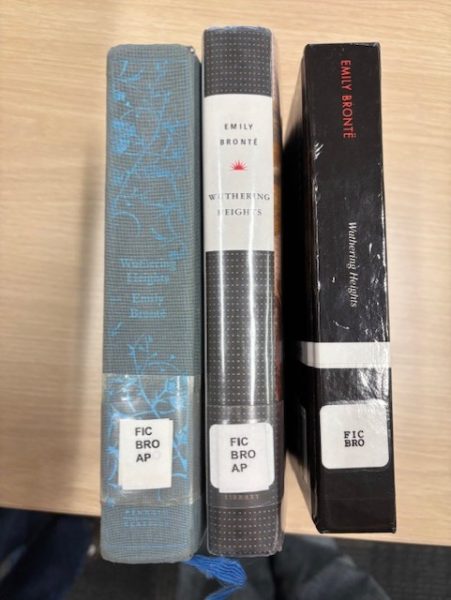
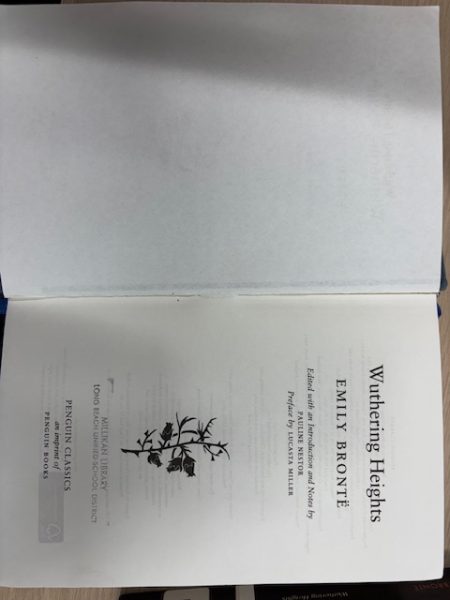
Wuthering Heights is a classic novel by Emily Brontë, published in 1847. It follows the story of Catherine and Heathcliff, two teenagers in the forests of Yorkshire. The story discusses themes of social class, love, revenge, and race.
On November 13th, 2025, the official trailer for “Wuthering Heights”, directed by Emerald Fennell, was released, revealing that Margot Robbie, known for her role in “Barbie”, and Jacob Elordi, known for his role in “Euphoria” as well as his role as Elvis in the recent “Priscilla” movie, will be playing Catherine and Heathcliff. Whom, once again, are both meant to be portraying teenagers.
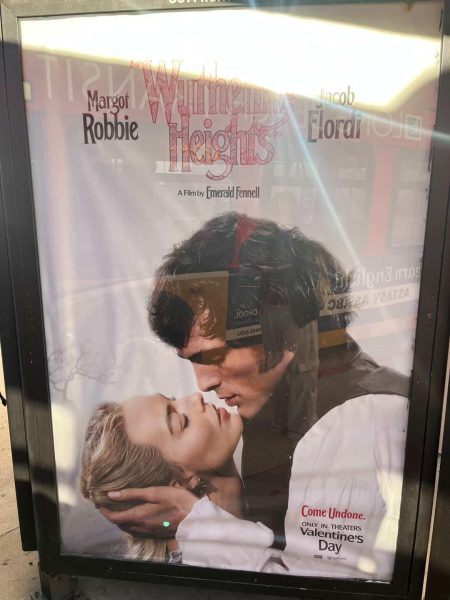
It is clear in the book that the characters are teenagers, and Heathcliff is a dark-skinned person, Brontë herself wrote him to be a “dark-skinned gypsy in aspect and little lascar,” so it should be completely out of question to have an almost thirty-year-old white man acting out what is supposed to be the struggles and mental challenges that lower-class people of color faced in the book’s time period.
Nicholas Barber for the BBC titles their article, on September 25, 2024, “Wuthering Heights: Hollywood’s Worst Casting Decisions,” and details how “There is no doubt at first glance the casting seems fundamentally, egregiously wrong: it has that mind-boggling, what-were-they-thinking quality which brings to mind a crass producer in a Hollywood satire, barking: ‘Wuthering Heights is kinda drab- let’s get Barbie and Elvis to play Cathy and Heathcliff!”’
Mr. Underwood, the QUEST AP English Literature and Composition teacher, sees both sides of the story. “Any person’s reading of the novel will be different from the next person’s because we, by virtue of the fact, are all very different people. Even directors will display different versions of the text from the next director, so what we end up with is really what that director found to be important and meaningful to put on camera.” Underwood states.
Mr. Underwood’s take on directors picking and choosing things they see holds importance seems to be a shared sentiment from readers. According to PEACE sophomore Olivia Carroll, a fan of both the movie and film adaptations of Harry Potter, “There are certain things in the book that are very important, and sometimes the director or screenwriter doesn’t see it or notice the actual message that that part is trying to say.”
While Fennel is permitted to have a specific vision for the film, I believe that to cast Jacob Elordi, an over-cast, middle-aged white man, for a film that celebrates its socially unique perspective is wrong. It was not common for writers, let alone female writers, to write about people of color. So casting a white man is almost taking away from the importance of Heathcliff’s character. We have seen this time and time again with the adaptations of this book, with the previous one starring Tom Hardy, another white man.
It should not be impossible in such a progressive day and age to create a film that accurately represents social minority groups that are intended by the author.



Samantha Camberos • Feb 3, 2026 at 9:46 am
This article successfully explained the controversy of casting Margot Robbie and Jacob Elordi as Catherine and Heathcliff in Emily Bronte’s Wuthering Heights. As someone who is reading Wuthering Heights, I was able to understand and agree with the author’s stance that Elordi and Robbie should not have been casted. The author does a wonderful job in describing how Wuthering Heights is a novel based on race and social class, therefore labeling Elordi as unfit to portray Heathcliff.
Moreover, I also appreciate how the author took the actors’ ages into account when critiquing the casting choice. The author effectively compared the film’s accuracy to the book and was able to determine another flaw in the casting choice. One suggestion would be to evaluate Robbie’s age and write how she is also not fit for the role of Catherine. Another one of my suggestions would be to incorporate the book’s description of Catherine and Heathcliff and offer some alternative actors that could play the characters. I believe this could help the reader gain a better understanding of the physical descriptions of Catherine and Heathcliff.
Overall, this article was very informative and helped me gain a new perspective on the importance of Wuthering Heights when it comes to race and social class. I appreciate how the author critiqued the film industry by declaring that films should accurately represent minority groups as the author intended. This article was very well written and I applaud the author for incorporating many different perspectives on the casting choice.
Lillian Kotlarski • Feb 2, 2026 at 1:34 pm
Barth discusses the implications of director’s casting choices on the accuracy and proper honoring of a story. When I had first heard of the casting choices of Margot Robbie and Jacob Elordi for the new Wuthering Heights remake I thought they were an awkward fit, so it was interesting to see someone unpack exactly why they would not be a good fit. Barth unpacks the inaccurate age gap between the actors and their on-screen counterparts as well as the choice to take away the story of a person of color in the book by casting a white man (Jacob Elordi) for the part to argue that the director, Emerald Fennell is completely changing the story of the original author, Emily Bronte. She compares the Harry Potter movies and books to make the point that director choices can affect the message of the book, while also conceding that everyone is open to their own interpretations of literature. I wondered if there was any statement from the director that the author could include about the reasoning behind the casting choices? This would add to the context of the article while still leaving room for criticism.