
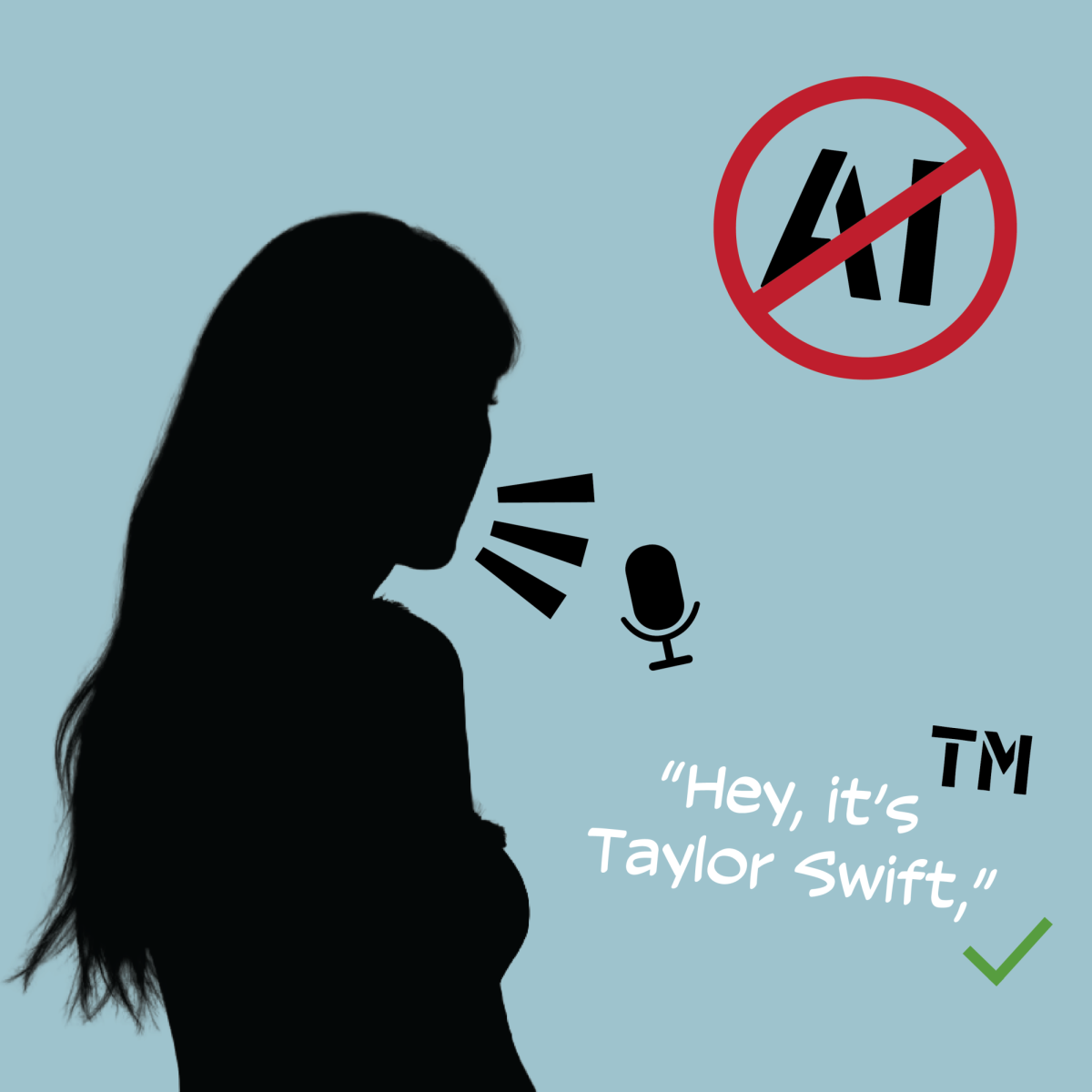




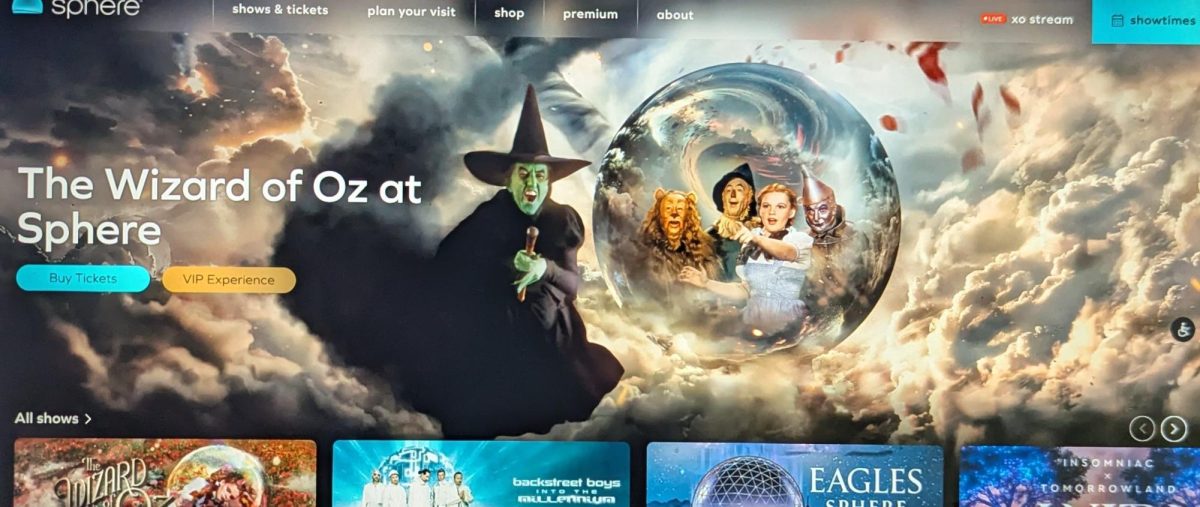
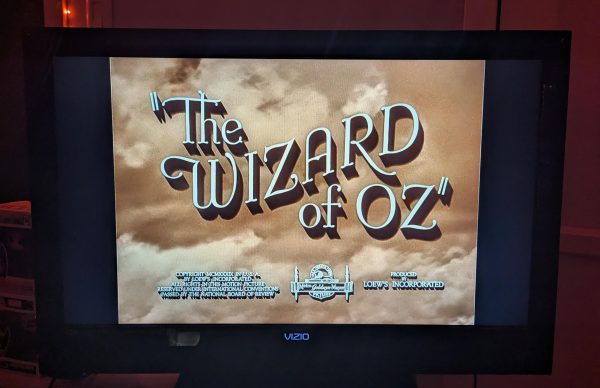
The AI-altered version of 1939’s The Wizard of Oz, signed off by Warner Bros. (made exclusively for the Sphere in Las Vegas) is a prime example of a fundamentally creatively bankrupt endeavor that puts a stain on the original film’s legacy.
There’s no denying at this point that AI has segmented itself as an undeniable force in today’s culture, and seems to have carved a spot for the foreseeable future.
For me however, AI’s use has also become a marker of artistic integrity, serving as a true indicator to creative merit (or lack thereof). This showcase in particular is one that reeks of soullessness, and really begs the question: “why?”
“Not everything needs to be ‘improved’,” says SEGA Graphic Design teacher Mark Pearson, who believes the ambitious venture ultimately comes up short.
Pearson commented on AI’s addition to the show’s overall look, saying that it’s “a distraction from both the storytelling and [non-AI-enhanced] visuals.”
By drastically stretching the aspect ratio of the original film to fit Sphere’s larger-than-life screen, the image reads as mostly dull and flat, creating an uninspired look that would have had the company better off not using The Wizard of Oz in the first place.
Although this particular spectacle is clearly more event rather than story based, Pearson and I both agreed that the final product tries too hard to look “perfect”, and in doing so, Pearson added, the movie loses the feeling of “authentic filmmaking” that makes art, art. Instead, the projection comes off as a lifeless, ugly, and insulting piece that only looks worse when compared to its original counterpart.
Contrastingly, Melissa Ruggieri, in her article for USA Today reviewing the event, called it “nothing short of extraordinary”, and noting it as having several moments that’ll “take your breath away”.
Along with her general praise, she also commented on the online uproar over the use of AI, saying that the film (which I hesitate to call it) shouldn’t be criticized until it’s “experienced in person.”
This statement deeply frustrates me. My criticisms aren’t aimed towards the experience itself, which I admittedly haven’t experienced, but the utilization of the AI technology, which I am able to see, and thus should be justified in critiquing.
Additionally, the sentiment she expresses is not really applicable once you factor in the cost of the event and how it’s inaccessible to a large percentage of Americans.
COMPASS sophomore Vanessa Reitano however is strongly against AI’s employment in the Sphere’s production, citing it as “outrageous” and “offensive.”
She believes that AI, due to its inherent unoriginality, should be nowhere near the arts, passionately stating, “the use of AI in any creative space is unethical, and I wish more people would recognize that.”
Reitano closed with, “The whole idea of [AI] is that it takes”, referring to artists and filmmakers, and that practice should not be rewarded or encouraged.
If this experience at the Sphere shows us anything, it’s that regardless of how much money and resources these outrageously big companies have, they’ll still make the active decision to cut corners when it comes to producing entertainment, not only taking away opportunities from true creatives, but bombarding audiences with vapid images that condition them to expect this from their entertainment.
Instead of creating an original experience that doesn’t require alterations, Sphere Entertainment (with Warner Bros.’ spineless approval) took the easy way out, and in result, butchered The Wizard of Oz in all of its technicolor glory; masking this betrayal to art as a step forward in technological innovation, which it really couldn’t be further from.


Bailey • Oct 21, 2025 at 12:48 pm
On October 7, 2025, Nicole Daigle wrote an article titled “ The Wizard of Oz, AI, an Unnecessary “Innovation””. I found this article to not only be enjoyable but educational as well. Before reading this article I didn’t know anything about this situation. I don’t follow social media much and I only watch the news on occasion so I legitimately had no clue this was even happening. I also enjoyed how she wrote about a controversial issue and was not afraid to state her own opinion about said issue. I feel a lot of articles sometimes try to dance around the real meaning of the piece in order to avoid criticism. But because Daigle was straight and to the point with her claim and reasoning to back it up it made the article very engaging, easy to understand, and persuasive.
As I said before, when I found this article I had no idea this was even happening. When I read the article I was both shocked and intrigued. I had known AI had become a big part of today’s culture but I had no clue it had stretched this far. As I continued to read Daigle’s article, I agreed with her position toward the event and how it was put together. I found it odd they would take a classic story, whose beauty comes partially from the fact it is imperfect, and try to make it look as perfect as can be. To quote Daigle, they took the thing “that makes art, art.”, it’s imperfection.
The one question that I am left with is, why? What was the reasoning for using AI in order to “enhance” the image? Why try to make it perfect? It would have been nice to see a quote from someone from the project trying to justify the usage of AI just so I could answer these questions and see more of the whole story. Other than that, this article was lovely and I give my compliments to the writer.
Zoe Miller • Oct 20, 2025 at 12:48 pm
The article truly impressed me with its eloquence and word usage. The tone remained formal throughout the text, keeping me hooked. It was highly informative, as I previously had not heard about the film being screened on the Las Vegas Sphere before reading. The article details background information about the topic very clearly, although it would be intriguing to hear more opinions on the ordeal from the general public.
I also commend the argument against the usage of AI and the various citations backing up this standpoint, as well as a counterargument. This article words its criticism against AI very boldly, with the statement, “…the film (which I hesitate to call it)” being especially amusing.
Overall, this was a highly informative article that goes into depth about the deeper significance of AI in art and life. I greatly enjoyed reading it and look forward to any articles on this topic in the future.
Adrina • Oct 20, 2025 at 10:39 am
On October 7, 2025, Nicole Daigle, wrote an article titled “The Wizard of Oz, AI, and Unnecessary “Innovation “”. The article is on the controversy around the AI enchanced version of “Wizard of Oz” being shown at and exclusively for the Sphere in Las Vegas. The editor gives both sides of the controversy as well as a description of the showing itself. The article also includes intereviews from people both on and off campus giving insight to the showing and alteration of th movie.
I enjoyed the opinion being more leaning more in favor of the unedited version of the Wizard of Oz because I agree that the use of Al to enhance the movie makes it seem dull and lifeless compared to the original version. Despite this I think you should also include and lean into the downsides of Al use and enhancements in the article. It is briefly mentioned how the use of Al on an already existent movie lacks artistic integrity as well as it is an easy way for big companies to cut corners and I wished you would have elaborated on as to why. The editor could have mentioned how many other companies and big artists are starting to follow in the same path and use Al to do the work for them, instead of hiring artists, writers, musicians, etc. Putting many out of jobs, or they could have mentioned the effect Al has on the environment to further push the narrative that this is a necessary innovation. To close I thoroughly enjoyed the article but I wished that you would have included why the use of Al was unnecessary.
Samantha Garcia • Oct 15, 2025 at 2:47 pm
When I came across this article in Corydon, I was ecstatic to see that the issue of AI being used to replace art was finally being addressed. As an artist who is hoping to pursue a career in the film industry, Daigle perfectly captured how most of us artists feel about AI in art; we are enraged. I also believe that Daigle perfectly described how when AI is used in place of art it looks like it has no soul, or as described in the article, it “comes off as lifeless.” In addition, I also heavily relate to the statement that Mark Pearson, a SEGA Graphic Design teacher who she interviewed, makes when he also describes how using AI in film “loses the feeling of “authentic filmmaking” that makes art, art.”
Furthermore, I also agree with Daigle’s statement that AI in art and film is continuing to get worse as people are “masking this betrayal to art as a step forward in technological innovation.” Due to this, I truly believe that covering more stories on this topic will help raise awareness of this issue. One huge story that should be covered is the world’s first AI actress, Tilly Norwood. I personally believe that this is a huge intrusion on the film industry and that there is no reason for AI actors and actresses to exist. Because of Daigle’s similar views on AI in this field, I think she would do an amazing job covering this story and expressing how big an issue this really is.
In addition, one reason Daigle stated that AI was harmful in the Art industry was because it takes “away opportunities from true creatives.” I think it would also be very beneficial to do an article on this issue in particular. There are so many creative jobs in the world that are being threatened by AI, and there aren’t enough people speaking out about it. I am a very creative person myself and hope to work in the film industry as a set designer, however, that may not be an option anymore due to AI. I believe that this is truly unfair and should be spoken about by people who are also aware and knowledgeable of this issue, like Daigle.
Annabelle Lawrence • Oct 14, 2025 at 1:46 pm
While I was drawn to this article because of my own disdain for the growing prevalence of AI, I finished reading it with a newfound understanding of the dangers AI poses to the arts. Scattered across the article are compelling uses of diction such as “insulting” and “spinless” that drive home the idea of AI being art’s greatest threat. Through the example of The Wizard of Oz being enhanced with AI imagery at Las Vegas’s Sphere, Daigle brilliantly defends her stance against the technology. The use of the Wizard of Oz is not only a great example because of its relation to this topic, but also because of its place in the history of Hollywood and relation to the upcoming movie Wicked: For Good. It seems that with the availability of AI some companies have decided to take advantage of the ease that the tool provides, however the cost of AI is the creativity and originality that Hollywood was built off of. This is an issue that has unfortunately become intertwined with society regardless of their participation in the arts and as demonstrated by Daigle, it is imperative that consumers use critical thinking when consuming art forms.
Nina L • Oct 14, 2025 at 1:35 pm
While reading this article, I found it very persuasive in the argument against AI. I really appreciated the descriptive words that Nicole utilized, like “butchered” and “lifeless” in order to illustrate how the AI remake of the Wizard of Oz felt to many. I agree with Nicole’s view that AI does not belong in the arts, because art should be original and should have a purpose that isn’t only for monetary gain. I admire her critique of Sphere Entertainment and Warner Bros.’s decision to recreate this iconic movie, by calling it “spineless” and pointing out that the original movie didn’t need fixing.
Additionally, I thought that the input of a contrasting opinion helped the article to seem professional and representative of both viewpoints. Her use of quotes from different sources, such as a student and a teacher, were well used and helped to strengthen her argument and display the emotions and thoughts caused by the misuse of AI in the arts industry. Finally, I would like to show appreciation for Nicole’s commentary surrounding the quotes, as it helped to lift up and emphasize the meaning behind her fellow student and teacher’s words.
Emerie Ann Cooke • Oct 14, 2025 at 11:34 am
Recently, I was exploring the website and I was intrigued by this article because of my fondness for the book/movie adaptations. Plus, this emphasized my belief that the use of AI should be maintained when it comes to creative work. I wholeheartedly agree that with the uprising of AI in recent years, big name companies like Warner Bros. are exploiting real artists from natural creativity and authenticity. Artistry at its core is about the process to get to the final draft and the contributions that are involved in every aspect along that journey. However, as I was reading I was skeptical of the comments made by a COMPASS student as there was no clarity on their credibility. I acknowledge that COMPASS is a pathway for those particularly interested in all kinds of arts but I would want to see how this person’s involvement with arts would contribute to the topic of discussion. Overall, I’m in favor of this article, it was extremely insightful to my understanding of AI utilization. It’s a significant reminder to people that as we evolve as a society we shouldn’t stray away from original ideas, they take time and cannot just be generated out of thin air. Do you think that full AI media is closer to taking over than we think or will we strive to preserve our natural creative habits?
Audrey Lozano • Oct 14, 2025 at 11:31 am
I read this article recently while perusing the Corydon’s new articles and the title caught my attention, as I also don’t believe in the use of AI in media as the title suggests. After reading, I found that Daigle used bold words like “lifeless” and “insulting” that argued her point well and really emphasized her dislike of this kind of technology. I agree with her opinion, as far too often I see ads for AI tools and helpers that take away space for creativity in everyday activities. I strongly admire Daigle’s commitment to the topic of AI, especially in a world where the topic can be so controversial.
I particularly like how Daigle focuses on AI used for large-scale events or remakes. In what seems to be an attempt to make money, many companies have been trying to remake or create sequels to originals that should be left alone. Daigle acknowledges this by mentioning how the event held was not accessible to many people because of the high price, and how it “puts a stain on the original film’s legacy.”
Not only was Daigle’s article informative, but it was also well written. She acknowledges both sides of the story, while compiling statements from members of Millikan’s own community. It was nice to see that other people on campus hold similar beliefs about AI and its use in art. Overall, “The Wizard of Oz, AI, and Unnecessary ‘Innovation’” was a captivating read that revealed something going on in the world that I would have otherwise been unaware of.
Lina Modica • Oct 14, 2025 at 9:32 am
I think the author did an incredible job. I absolutely loved her creative insults that she constantly hurled at AI art, and I couldn’t agree more. My personal favorite was the one where she called an AI corruption of The Wizard of Oz a thing that “reeks of soullessness, and really begs the question ‘why?’”. However, “bombarding audiences with vapid images” and “butchered The Wizard of Oz in all its technicolor glory” were both close seconds. Overall, it looks like Nicole has an excellent handle on her diction and knows exactly which words to choose to cut opposing arguments to ribbons.
Furthermore, Nicole also backs up her cutting insults with relevant and sufficient evidence. She didn’t just tell the reader what she thought of the topic; she supported her ideas with a wide variety of diverse and relevant evidence, all of which were naturally introduced into the article. I also liked that she included evidence against her own point of view, and proceeded to tear it down in a logical and devastating manner.
Finally, what really made this article good was that it all made sense. I know that doesn’t sound like a lot, but a lot of the other articles I read through before I decided on hers didn’t flow quite right or all make sense in the end. Nicole’s does. I could easily follow her line of reasoning all the way through and figure out her main point at the end. To sum up, this article was close to perfect (except for a handful of typos).
Sophia Quezada • Oct 13, 2025 at 4:21 pm
I found this article a wonderfully written commentary on one of the many ways AI has inserted itself into the world of entertainment. The bold, unashamed diction of the author was a delight to read and bolstered the argument. I found that the article had a distinct voice that draws one in and reads as a expressive, persuasive text, rather than a simple, bland statement. This article was truly a pleasure to read.
To continue, I particularly appreciated the use of several opinions outside the authors own argument to fully portray the details of the topic being discussed. Receiving multiple perspectives allowed for one to develop a full comprehension of the topic instead of solely relying on the viewpoint of the author. However, a concern lies in the development of background information. Though the article is incredibly strong, it could benefit from additional details surrounding the context of the films showing in Las Vegas. How, specifically, was AI used to alter the film? Additionally, when it is mentioned that the cost and inaccessability of the event to Americans hinders the value of the experience, more information could further clarify and support that statement. Giving the audience sufficient background information would enhance the article.
In summary, this article shed light on a prominent issue surrounding the state of artificial technologies. Bringing attention to the impacts of developing technology on entertainment industries increases both awareness and understanding on how this change effects the distribution and consuming of film and media. The authors creative use of words and phrasing enhanced the argument, creating a persuasive argument that was equally entertaining and thought-provoking to read. In short, this article is clearly full of passion and care, traits that are vital to the success of argumentative journalism. It is excellent work.