



















California’s Phone-Free School Act policy goes into effect at Millikan on Monday, Jan. 26, the first day of the second semester. According to the Ram Rundown sent to students and families Sun., Jan 4, students in grades 9-12 have to have, “all personal and/or wearable communication devices must be powered off and stored in backpacks/bags during instructional time.”
On Sept. 23, 2025, California Governor Gavin Newsom signed the Phone-Free School Act, a law limiting the use of phones, smart watches, and any type of headphones in all schools in California. The governor states, “We know that excessive smartphone use increases anxiety, depression, and other mental health issues… help students focus on academics, social development, and the world in front of them, not their screens, when they’re in school.”
Ms. Moreland, COMPASS Assistant Principal, explains the consequences if students don’t abide by the policy saying, “With the first offense, the student will get a warning and the teacher will have a conversation with the student. The 2nd time, the device will be taken by the teacher until the end of the period and then the teacher will notify the parent. The 3rd time, the device gets taken and is given to Mr. Heinrich. Beyond that, the device will be held until the end of the day and have to serve a 15 minute detention.”
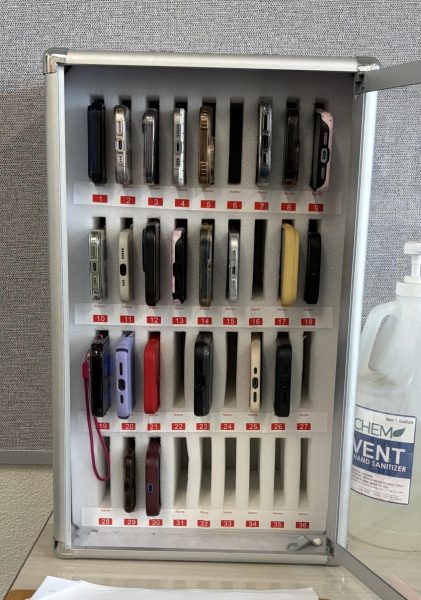
Moreland explains that in more serious circumstances, students might have to turn in their phone to the office at the beginning of the day or get other support measures.
Teachers at Millikan are required to enforce this law, and FST/Pre-Calculus teacher Mrs. Sharp has been informing her students of this policy since coming back from break. “I do believe the policy is necessary… seeing kids addicted to their phone, where they can’t go a couple of minutes actually looking at their screen. I completely believe it’s a huge problem that needs to be rectified in many ways,” she says.
Mrs. Sharp believes that these restrictions won’t make schools unsafe; instead that it would make lockdown situations more dangerous if students try to text their parents information.
Freshman in PEACE, Ta’niya Duncan, heard about the phone policy from her teachers and believes that it’s not necessary. “We don’t need to have [phones] in our backpacks all period… especially in case of an emergency, we should be able to have our phones and get in contact with people,” states Duncan. “I think students are going to get angry,” she adds.
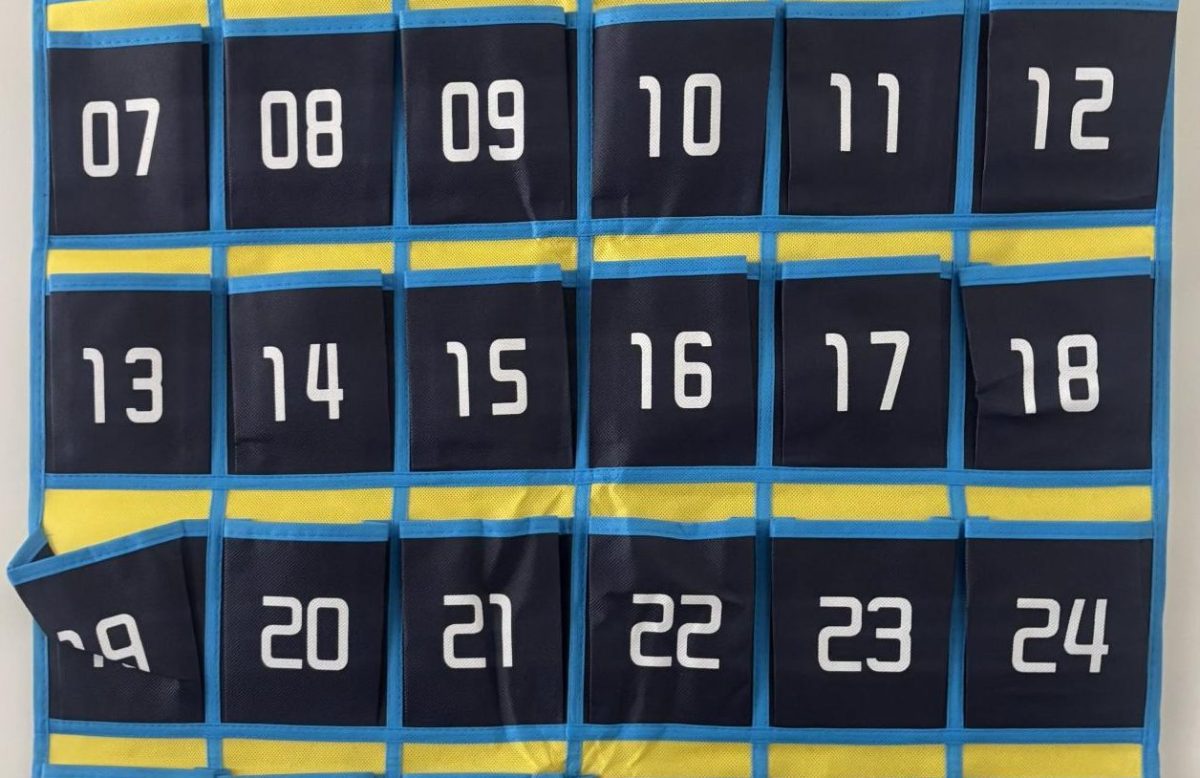
All teachers are being given phone pockets and are encouraged to use them during class. Students and teachers both should be prepared for this major switch during the second semester.




Amari Garcia • May 27, 2026 at 11:56 am
Rose does a great job at bringing context to the table. Some articles expect the reader to understand some of the background information and don’t provide context. Luckily, context is added when Rose brings up the policies that Governor Gavin Newsom put into place. Our school has implemented this because they have to follow the rules and so do the teachers. Even bringing up two teachers to bring up their opinions about these policies. Ms. Moreland with informing what actions will be taken in order to enforce these rules and Mrs. Sharp with her concerns for the students’ safety when it comes to lockdowns.
Even adding a perspective from a student that says, “‘We don’t need to have [phones] in our backpacks all period… especially in case of an emergency, we should be able to have our phones and get in contact with people,’”. Rose did a great job at keeping their opinion out of this article and only talking about the opinions students and teachers have. The images also provide information on what tools the school and teachers will use in the future to better enforce these policies.
I do think that bringing up the idea of how the teachers are FORCED to follow these rules to avoid students taking these policies personally. Even though it was mentioned in the article and explained throughout, it might be a good idea to restate this idea in the conclusion. The conclusion itself restates the ideas in the article but should include more of the information on how this affects the entire state and how everyone is going through this together, not against.
Kaylie Rodriguez-Adame • Feb 16, 2026 at 2:55 pm
This article well explains the enforcement of the phone ban in California and how it is affecting students and demonstrating how it is intended to work after going into effect on January 26, 2026. Varley included a wide spread of quotes from Ms. Moreland, Mrs. Sharp, Ta’niya Duncan, and Governor Gavin Newsom. I appreciate the fact that Varley included quotes that clearly illustrate both perspectives based on the Phone-Free Act starting in California, which made this article feel equal and fair for everyone who shares a contrasting opinion given that this topic is controversial. Additionally, this article well exhibits the consequences of the first, second, and third offense that will be given if students choose to not follow the Phone-Free Act. Overall, this article is well written and exemplifies the reason behind the creation of the Phone-Free Act and the concern that is being given for the wellbeing of California students.
Kody Rankin • Feb 14, 2026 at 12:12 pm
On January 26, 2026, student reporter Kayla Castillo wrote an article titled “Screens to Studies: New Phone Ban Starting 2nd Semester” about the implementation of California’s Phone Free School Act at Millikan High School. I appreciated how the article clearly explained the new policy and included perspectives from both teachers, and students. Quoting school staff members helped show the difference in responses across campus.
One strength of the article is how it outlines the consequences students may face if they violate the policy, which helps clarify expectations. However, the article could have more thoroughly explored student reactions, especially considering the risk of potential emergencies and access to phones during lockdowns.
Overall, the article made me reflect on students’ addictionon their phones and social media. Including whether stricter rules will improve focus in class, and reduce all of the mental health issues originating from phone usage. An additional article evaluating the effectiveness of the new phone policy would be interesting to see.
Thanh Nguyen • Feb 11, 2026 at 12:46 pm
This article caught my attention the most out of all the articles as it
is about something that directly affects all students. I enjoyed how this article included details about the phone ban law and how the school itself is going to implement it. The article includes a saying from both teachers and staff which allows us to get opinions and thoughts from both sides on the situation. It would be nice if in any future articles about this topic, included more about
the consequences of students not abiding by this new law. Articles like these are nice as they help keep students and those at Millikan informed on what is going on at the school. The law itself seems somewhat necessary as students and I myself have a problem when it comes to phones or technology in general. While the phone law is annoying in ways, I feel that a law like this will somewhat help contain the problem and make us less reliant on devices.
Zoe Miller • Feb 6, 2026 at 12:49 pm
I admire that this article provides background information regarding the phone ban and its cause being the Phone-Free School Act, with direct quotes from California Governnor Gavin Newsom, who explained that this ban was due to the anxiety, depression, and other varying mental health issues that arose from excessive phone usage. I had not known the exact reason for this ban prior to reading, so I appreciate that the information was included. The article also described the consequences of not abiding by the ban via direct quotes from COMPASS Assistant Principal Ms. Moreland, which will properly informs readers of what to expect and adjust to in this new semester.
Another aspect of the article that I like is that it provides varying perspectives on the new phone ban, imcluding quotes from a teacher and a freshman student, each providing their own input. It is very insightful to hear both sides of the reactions to this new change, and, with the provided background information, readers can make their own opinions on the phone ban too.
Addison Schneider • Feb 5, 2026 at 8:04 pm
I think Rose Varley did a good job writing this story. She explains when the phone policy starts and what students are expected to do, which is helpful for people who don’t know.. Even though I personally do not like the policy, the story was still interesting to read because it showed different viewpoints. It was cool that she actually went into explaining the rules and possible consequences if they are broken so students know what could happen if they break them. I also liked how she included quotes from teachers and students because it made the story feel more real and gave us an idea of everyone else’s opinion. Hearing from Mrs. Sharp helped explain why some teachers support the policy, even if I do not agree with it. Including a student’s opinion also made the story more relatable not only for me but also many other students who might have the same opinion. The writing was easy to follow and stayed focused on the topic throughout the whole thing. Even though I disagree with the phone policy, I think Rose Varley wrote an interesting story that helped me and other people understand all viewpoints on what different people think and feel about it. This story made me start to think, I wonder what students parents may think about this policy and how it may affect them and their children
Sophia Romero • Feb 5, 2026 at 11:17 am
As a student being currently affected by this new phone ban it was very helpful to have an article written on what the new law was in a way that I was able to easily access. Having the background on why the new law was created and quoting the governor helped give me a better understanding of the reasons behind the law. I liked how she quoted our staff at Millikan to clearly lay out what consequences may come from the school as well as the viewpoint that some teachers may have. I also appreciated that she got quotes from students too because it gave a nice contrast of reasons why the law could either help or hurt students. The article created a clear and easy way to understand both what the law is and hear viewpoints expressed by not only teachers but students as well. I think this provided a nice announcement of what students should expect for this new semester in the classrooms.
Jennifer De Haro • Feb 4, 2026 at 9:42 pm
I appreciate Varley’s mention of how this whole phone policy arose. Many students, including myself, might not have been aware that this was decided upon by the state of California, not the teachers at Millikan. In addition, she does a great job at summarizing the rules students have to follow.
Though many of my peers have demonstrated disapproval with the phone ban, I feel indifferent seeing as many of my teachers have already done this before. Regardless of having a ban on phones or not, I do not agree that students should be spending more time on their phones at school than they already do at home. As mentioned by Mrs. Sharp in the article, there is definitely an increase in the amount of time students are using social media and other forms of technology. The main concern in this situation is the grades of students. I hope this policy is able to enforce a routine in the students schedule where students can balance their virtual and real life.
Furthermore, I respect Varley’s inclusion of both a teacher’s opinion and a student’s opinion in this debate. Eventually, we all have to get used to the idea that technology has become a norm among younger generations. Students, and especially the upperclassmen, may rely on their cell phones for work calls, emails regarding scholarships and deadlines, and nonetheless, emergencies. Emergencies is a factor I believe should have been a priority when addressing this policy. Of course, families can always communicate with students via administration and classroom phones. But how reliable can that be with something urgent?
Macy Blackman • Feb 4, 2026 at 7:53 pm
On January 26, 2026, Rose Varley wrote an article titled “Screens to Studies: New Phone Ban Starting 2nd Semester”. I came across this while going through the recent articles from the Corydon, descriptions and information about the new phone ban coming to Millikan in the second semester are compelling. Varley describes the reasoning behind this phone ban and explains the changes that will come with it. For example, as she provides quotes from California Governor Gavin Newsom about how students’ anxiety is linked to their phones, she is able to illustrate why this phone ban is truly needed in schools, and how it is meant to benefit students not only academically but mentally as well. I admire how she is able to connect why this new policy is coming to Millikan, to what the policy really is and what the changes and consequences will look like.
Varley does a great job of gaining multiple perspectives on this issue, and sharing these contrasting opinions of the phone ban. She shares the point of view of Millikan FST and precalculus teacher Mrs. Sharp, and how she feels that issue of phone addiction needs to be addressed and that the new “…restrictions won’t make schools unsafe…” Hearing this perspective of the phone ban will allow students to see the positives in these changes and be more open to letting go of their phones for a few hours every day. In contrast, Varley also offers the opinion of Millikan freshman, Ta’niya Duncan, and how she feels that the phone ban is not necessary, and even brings up safety concerns, “…especially in case of an emergency…” This perspective of focusing on more of the negatives of the phone ban is also helpful in being cautious of the possible dangers that could come from the policy. Altogether, Varley’s article on the new phone ban allows her audience to get a better understanding of what changes will be made to the normal school day at Millikan, and provides strong pieces of information to help students shape their own opinions on this issue.
Steve Duarte • Feb 4, 2026 at 11:27 am
On January 26, 2026, Rose Varley wrote an article titled “Screens to Studies: New Phone Ban Starting 2nd Semester.” I appreciate how clearly you explained the new Phone‑Free School Act and how it will impact students at Millikan. This is a topic that affects every student on campus, so I think it’s important that you covered it in a way that was easy to understand while still giving enough detail about the law and its purpose.
One thing I especially liked was how you included quotes from both staff and students. Hearing from Ms. Moreland and Mrs. Sharp helped show the reasoning behind the policy, while including Ta’niya Duncan’s perspective showed how students might feel frustrated or concerned. This balance made the article feel fair and informative.
A suggestion I might offer is to expand a bit more on how the school plans to support students during the transition. You mentioned phone pockets and consequences, but I would have liked to know whether teachers or administrators talked about how they expect this to affect classroom culture or student stress levels. Adding that could help readers understand the broader impact of the policy.
I also had a question about the interviews you conducted. Were the teachers and students you quoted people you already knew, or did you reach out to individuals you weren’t familiar with? I’m curious about how you chose who to interview and whether you tried to get a range of opinions.
Overall, I think you did a strong job presenting the facts of the new law and showing how it will change daily life at Millikan. The inclusion of photos, especially the phone pockets, helped visualize what students should expect. Much praise to Rose Varley for a well‑written and timely article..
Victoria Hijazi • Feb 4, 2026 at 9:44 am
On January 26, 2026 Rose Varley wrote an article titled “New Phone Ban Starting 2nd Semester”. I think that this article can be viewed differently which is why I find it interesting. Students have the idea that it is not a good way to start off the year while as mentioned teachers like Mrs.Sharp think it’s beneficial and will improve things moving forward. I enjoy how Varley decided to include the students’ perspective on this new phone ban because it’s making the groups of students and teachers feel seen.
On another note having the background of this issue and talking about how it is a California school rule now is very helpful to understand. Varley mentioning that Governor Gavin Newsom signed the Phone-Free School Act, gives us a background that this issue is very serious and this is really the only way schools can stop the issue of the phone addiction in classrooms.
I think that the consequences are fair considering there’s not a harsh punishment right away but part of me believes that each student is in control of their own education and what they choose to do at school is their choice. But the author of this article did a great job giving us background information, evidence, and different opinions on this new cell phone ban.
Sincerely,
Victoria Hijazi
Jordan Leibl • Feb 3, 2026 at 11:02 pm
I read this article while scrolling through all the articles on Corydon. I found this piece very interesting because it explains how the new phone policy will affect all students at Millikan high. The article is built to show different perspectives and views on whether the phone-free policy is necessary. I thought it was interesting to see the viewpoint that limiting phone use can help students focus more on school and their mental health. The article states that Governor Gavin Newsom believes excessive phone use can cause anxiety, depression, and other mental health issues. I like how the article explains why the policy was created and how it will be enforced at Millikan.
I admire the article overall and like how it is not just about the benefits of the phone-free policy but also talks about concerns students have. I found it interesting how the article explained the consequences if students do not follow the policy, especially how each offense is handled differently. I feel it would also be interesting to include more details about what it is like for students once the policy actually starts and how it affects them during the school day.
I like how the article did not only use one person’s opinion but also included thoughts from teachers and students. By doing this, the author is able to show what others think and not just their own beliefs. The article was engaging to read and gave different viewpoints throughout. I found it interesting how teachers believe the policy will help with phone addiction, while some students think it may cause problems in emergencies. Overall, the article made strong points and gave a detailed explanation of the Phone-Free School Act and how it will impact Millikan.
Stella Sivitos • Feb 3, 2026 at 9:27 pm
When looking through this month’s Millikan Corydon, I came across this article about California’s new Phone-Free School Act policy that immediately caught my attention. It sparked my curiosity as I wanted to gain an understanding of how my peers view this recently developed system and the rising concerns it may alleviate among students and staff.
I admire how this article includes a wide range of various contradicting perspectives from a student, teacher, assistant principal, and even Governor Newsom’s reasoning behind creating this policy. These viewpoints immensely strengthen the article by presenting a balanced discussion rather than a one-sided argument.
However, it would be exceptional if the report provided insight into how the policy has influenced student performance over time, as well as how it has both positively and negatively impacted teachers. Also, it would be effective to address concerns over instances when students may need to contact their families in case of emergencies.
Isabelle Ruvalcaba • Feb 3, 2026 at 7:23 pm
The article is very detailed in explaining the impact of the new cellphone ban at schools and the different opinions about the topic. For instance, Varley interviews a FST/Pre-calc teacher, Mrs. Sharp, who said, “I do believe the policy is necessary… seeing kids addicted to their phone, where they can’t go a couple of minutes actually looking at their screen.” This evidence gives a point of view that agrees with the phone ban in schools. On the contrary, she interviews a student from the PEACE pathway, Ta’niya Duncan, who said, “We don’t need to have [phones] in our backpacks all period… especially in case of an emergency, we should be able to have our phones and get in contact with people.” This piece of evidence indicates the opposing views that go against the phone ban. The significant use of evidence by Varley helps to inform her audience about the phone ban and how it has impacted schools, teachers, and students.
The article captures the concerns about the new phone policy in school. Even though people may feel upset about the phone policy, everyone should have an understanding of how technology has changed the system of education. A lot of research has indicated how harmful the excessive use of technology can be. We should consider how luckier we are than most schools because other schools are banning phones completely. They can’t be used during any breaks or at lunch time and many have to be locked in special pouches that can’t be opened without a special tool. We should learn to have more self-control with our use of technology and know how to take a break from it from time to time.
The editor did an amazing job writing the article because she made sure to highlight everything regarding the situation. I think that the article really engages the reader to learn more about the phone ban in schools. This is a good topic to write about since the ban is taking place in all of the schools in California.
Jessica De Haro • Feb 3, 2026 at 6:36 pm
This article is successful in elaborating what the policy is and the differing perspectives people at millikan have. While I do see how restricting cell phones can create harm in cases like a lockdown, I do believe that this new policy brings many benefits to the environment of a classroom. Nonetheless, I admire the author’s ability to include various sources and opinions into her article. Her addition of student and staff opinions allow me as a reader to analyze how this policy will affect millikan as a whole. I also appreciate how she informs her readers on the consequences students will have if they decide to not follow the cell phone ban, providing sufficient information for students to acknowledge how this policy will impact them. One thing I may suggest is elaborating more on the students’ opinions when it comes to how the cell phone ban will be implemented in cases of emergencies. Many students’ concerns with the policy are about having an emergency which they need to attend to and it would be interesting to see what other grades in different pathways think. All in all, this article does a significant job in providing the readers with a deeper understanding of the cell phone policy.
Johan Monsivaiz • Feb 3, 2026 at 1:58 pm
The author of this article does a good job of explaining the details of the new law. It was very informative and straightforward while also including student and teacher views on the subject.
One thing this article could benefit from is more of the student and teacher views on the phone ban. If the article included the inverse of what most people think; teachers supporting it and students against. This would benefit the article because showing teachers’ statements that are against it and students’ who are in favor of the ban could show more perspectives on the matter.
Finally, Varley’s call to action is also very good. This call wants the readers to know that this will be a major change and that they have to be ready for it. This call to action is beneficial because it prepares people for what is coming.
Sincerely,
Johan Monsivaiz
Caitlin Ujiie • Feb 3, 2026 at 1:57 pm
On January 29, 2026, Rose Varley wrote an article titled “Screens to Studies: New Phone Ban Starting 2nd Semester”. I was browsing through Corydon’s latest articles, and this one specifically caught my attention. As an eleventh grader, I’ve already adapted to a phone-free environment in most of my classes since the school year began. For me, it hasn’t been a significant change, but I understand that some of my classmates find it challenging. I believe that the phone ban creates a distraction-free zone in the classroom, allowing us to make the most of our free education. However, I find it quite intriguing that if students repeatedly violate the rules, they are required to hand over their phones for the entire day. This punishment seems excessive, and I hope that most students can avoid reaching that point.
Overall, I found this article interesting to read, and this phone ban is a positive step for all of us. Varley did a good job presenting this change, which will help us better understand its importance.
Kayden Franco • Feb 3, 2026 at 1:42 pm
The writer does a good job at presenting the mental health effects that devices can bring towards the user. Anxiety and depression is a growing issue and many times it is connected to what peple see online and how they compare themselves to certain social norms. I belive being off your phone for only a few hours won’t hurt anyone and it’s more important to focus in the classroom and further educate ourselves, rather than spend time doomscrolling. At the same time, I think we should be able to have our phones on our bodies in the case of an emergency. If there is a situation where we need to evacuate the classroom, the first thing everyone will go to is there phones in the phone pockets. This will put everyone in the class at a much further risk than they already were in.
Another thing the writer does well is get opinion from teachers and students. It gives real people a chance to express their opinions. While this is a good thing, it also feels like it could be very bias for each side of the problem. Many teachers think it’s a good thing because they believe it will get their students to actually listen to them. Many students will oppose the pockets because they don’t what to be without their phones. Some people work better when they have music playing while they work, but some teachers find it disrespectful and think they aren’t paying attention. Overall, I think the pockets weren’t necessary and it’s only going to make students hate school even more than they already do.
John Chau • Feb 3, 2026 at 11:45 am
This article was very helpful in shedding some necessary light onto the cell phone policy, and the origins of the planned law. When the plan was first implemented, I was completely in the dark about the prior context of the policy, and felt that it had appeared suddenly without really any warning. In reading this article however, I was able to better understand the reasoning behind why it is now being implemented, alongside the overall perspectives about the policy itself. Throughout my experiences with the policy in place, I have definitely seen the opinions and perspectives on the policy highlighted within the article.
However, I would like to see the reactions of parents on this policy, as they may also be indirectly impacted. Personally, I have heard parents who think this policy is a bad idea, as it can create more issues with communication, time-commitments, and overall mental health of the students. Other than this, I definitely would recommend this article towards my peers, as I have learned a lot about this new change on our school campus.
Samantha Garcia • Feb 3, 2026 at 11:44 am
I enjoyed reading this article, and I liked how relevant it is to us students. I also liked how Varly was able to portray the different views on this topic. It is interesting to see how teachers think of this new rule in comparison to students. Especially when it is directly affecting the students and not the teachers. It is also interesting to see how teachers and students see this rule regarding safety.
I personally agree with Duncan’s statement that, “We don’t need to have [phones] in our backpacks all period… especially in case of an emergency.” I think that in an emergency, our phones can be our best source of communication. This is typically why most students receive phones in the first place: in case we need to contact our parents, track our siblings, or call 911. By confiscating our phones, we lose our number one form of communication, which is necessary in an emergency. I also agree with Duncan on the fact that this rule will just cause students to be angry. I think if anything, this will make students want to have their phones out more or refuse to put them away. Most students don’t feel comfortable with the school being able to seize their personal items; this rule will just make it worse. Overall, I did like seeing both sides of this argument in Varly’s article, but I personally have to agree more with the side that is not in favor of this rule.
Landon Applegate • Feb 3, 2026 at 11:39 am
There seems to be a clear divide between concerned parents and students, and school district boards and teachers. When looking at a couple of examples, personal observations, and facts it is evident that it is not a clear answer whether it is more beneficial to allow students to have their devices or have all personal and/or wearable communication devices powered off and stored in backpacks/bags during instructional time. So, while California’s Phone-Free School Act is intended to positively affect the educational system, it also has its drawbacks.
Many students are distracted and not focused in class due to their cellphone. By eliminating the distraction, students are encouraged to participate and listen to instruction. Moreover, when students are prohibited from using their phone in class they are forced to think through problems and solve them with their mind alone. This can help teachers better understand students’ direction and placement in skill level. Likewise, having such quick and easy access to phones can cause the problem of cheating on assignments and tests. Because of AI software, students can find answers quickly instead of actually completing the work and are thus not truly learning, just copying. Overall, when students are separated from their phones, they are more involved and social with others, boosting teamwork and reducing loneliness.
However, if students’ phones are taken away and placed in the phone pockets all teachers were given, they will not be able to contact family members in emergency situations like natural disasters and school violence. For instance, in the Arapahoe High School shooting, students used their phones to help first responders combat the threat. Additionally, if parents know that their child has a phone on them, they can assure they are where they are supposed to be and are safe with tracking technology. There is also a peace of mind that comes with knowing their children are one text message away. On top of that, if there is ever a medical situation that requires contacting 911, students can potentially save lives with first responders able to take action quicker. To add on, cellphones withhold many effective and purposeful tools and educational resources that can assist students understand and grasp concepts, collect accurate data, and utilize other experts’ reasons to strengthen their work. All in all, California’s Phone-Free School Act does not take into consideration educational tools as well as safety precautions, making the act more dangerous than it is helpful.
Riley • Feb 3, 2026 at 10:59 am
The writer does a good job at explaining what the law is and what it will mean for high schoolers. With this new law comes the concern of what happens during an emergency, and students cannot contact their parents. Varley addresses this concern well by utilizing two different perspectives on the situation. I would like to hear more about what the students think about the situation and see if some students actually believe in the policy.
Varley did an amazing job at describing the consequences that will follow if a students breakes the phone policy. The concern about the consequences of a student whose phone gets sent to the office is that the student needs to contact a parent, or the parents need to contact them. This could lead to the student getting in trouble at home if the student doesn’t respond during the day. I would like to hear about what Mr. Heinrich believes about the policy and what he is doing to protect the phones from damage and theft during the day. I really liked all the differing perspectives on the policy through the article and how the author talked to people at the schools and who play different roles here at Millikan to understand how the school feels about the policy as a whole.
Joaquin Chavez • Feb 3, 2026 at 10:05 am
As another student at Millikan who is experiencing the phone ban as well, I am glad that this article includes the beneficial and potentially harmful aspects of the phone ban. I believe that stating the rules and limitations of the phone ban through Ram Rundown and going even further, explaining the ban’s roots from the Phone-Free School Act through the words of California Governor Gavin Newsom, was an excellent choice at enhancing understanding and setting up the reason for teacher and student opinions included later in the article. I appreciate the sequencing from the rules, to the roots and then to the consequences through the words of Ms. Moreland (the COMPASS Assistant Principle) as it layers perception of the magnitude of this ban efficiently. Including two points of views from two different generations about this ban (that being a teacher and a student), this article has the ability to relate to two groups of people that make up the type of majorities of Millikan High School too.
I would say that, even though including a teacher’s perspective like Ms. Sharp’s which supports the ban (due to addiction) while also including a student’s perspective like Ta’niya Duncan’s which opposes the ban (due to safety) could help a lot of people relate to this article, including a variety of opinions of teachers who do not support the ban and students who are neutral to the ban would likely bring even more depth to this article. It may seem that almost all teachers support the phone ban as it will aid them in class participation and awareness, however, it is possible that a teacher can be neutral to the phone ban or even in opposition as phones could have been helpfully utilized in certain classes. For example, phones are often used in art classes to gather reference photos, inspiration, and measurement for art projects, pieces, and activities. It is highly likely that a lot of students along with their teachers could be frustrated with this phone ban because it hinders their creative freedom and one of their essential resources that helps make their art successful. Including the difficulties that the phone ban can create and the various opinions that it generates, rather than the stereotypical opinions that teachers support it and students oppose it, could elevate understanding and relation to the diverse responses the ban produces.
This article is additionally, on point with including the measures that the ban takes to make sure the phone ban is enforced, not only with statements of its rules and consequences but also with the distribution of items like phone pockets for teachers to use. It is mentioned that the phone pockets were distributed to all Millikan teachers to ensure phones are away which further pushes the ban’s rule on phones in backpacks as well. As a finishing touch, not only would I add that the reason and desired outcome for this specific enforcement could be a range from trying to overcome addiction to increasing class participation but I would also add the actual outcome which can range from negatives like student frustration and anxiety to positives like its successful desire outcome (and which one of these outcomes that will likely appear more after this phone ban goes into effect). Overall, this article does a notably successful job at portraying the light and dark corners of the new phone ban but a few more additions about the differing opinions, desired outcomes, and actual outcomes it generates would add depth and efficiency to help readers with relation and understanding.
Colin Tran • Feb 3, 2026 at 10:05 am
The author did a great excellent job in emphasizing the new California’s Phone-Free School Act and how specifically Millikan High School is adjusting to this new cell-policy. She illustrated the purpose of the new rule by providing a quote from the California Governor, Gavin Newsom. Newsom explains how excessive usage in smartphones could lead to various mental health issues and by enacting this new policy it would help students develop social skills and their academic development. The author also provides the consequences if this rule is not followed, enforced by COMPASS Assistant Principal, Ms. Moreland. She explains the consequences for having multiple offences if this rule is broken multiple times. The article was really reliable especially because they have multiple quotes and perspectives from political people, teachers, and students.
Daniel Padilla Luna • Feb 3, 2026 at 9:57 am
As a student at Millikan High School, I’m very appreciative of this article as it informs me along with the other students on campus of the new phone policy taking place at the school. Varley greatly provides efficient information that allows for easy understanding of the new policy along with the consequences that come with the failure to abide by the rules. She mentions credible sources such as California Governor Gavin Newsom by quoting his comments on the recently signed Phone Free School Act which provides context on the origins of this phone policy, overall providing a proper background and well rounded information on the policy.
I also really condemn the variety of perspectives displayed throughout the article. Varley includes the views of COMPASS Assistant Principal Ms. Moreland, FST/Pre-Calculus Teacher Ms.Sharp, and a Freshman in the PEACE pathway, Ta’niya Duncan, which allow for her readers to see others’ thoughts on this new policy. This provides points of view from other credible sources, including some that are experiencing the same effects of the newly implemented policy, allowing for connections or differences on whether readers support the policy or vice versa.
All in all, the article was very well written and provides adequate information on the new phone policy of the second semester at Millikan High School. The article gives students of Millikan the chance to be informed of the policy, and to understand its origins. Finally, it demonstrates to readers what to expect moving forward with cellphones and how their use will look like on campus from now on.
Lola Alonso • Feb 3, 2026 at 9:37 am
This article is very well informed with multiple opinions making it a non biased argument. The writer is also very good at stating background information on the California’s Phone-Free School Act that states this isn’t just a Millikan decision. This article also states why the phone policy is to be put in place. It takes the ideas of how students can’t go a couple minutes without their phones and also how this isn’t something unsafe but something to improve the learning environment. The different opinions add a lot from Mrs. Sharp believes this will do so much good for students and protect our school. From Ta’niya Duncan believing it’s not necessary. All these opinions are building off the subject and making a more well rounded article. How will phones taken away help in emergencies? Besides emergencies could teachers each have their own policy? Overall I think the article is well written with credible sources from political figures like Gavin Newsom. Lastly it also gave me a great understanding of what the phone policy is truly trying to prompt for students.
Riley • Feb 3, 2026 at 9:37 am
The writer does a good job at explaining what the law is and what it will mean for high schoolers. With this new law comes the concern of what happens during an emergency, and students cannot contact their parents. Varley addresses this concern well by utilizing two different perspectives on the situation. I would like to hear more about what the students think about the situation and see if some students actually believe in the policy.
Varley did an amazing job at describing the consequences that will follow if a students breakes the phone policy. The concern about the consequences of a student whose phone gets sent to the office is that the student needs to contact a parent, or the parents need to contact them. This could lead to the student getting in trouble at home if the student doesn’t respond during the day. I would like to hear about what Mr. Heinrich believes about the policy and what he is doing to protect the phones from damage and theft during the day. I really liked all the differing perspectives on the policy through the article and how the author talked to people at the schools and who play different roles here at Millikan to understand how the school feels about the policy as a whole.
Matteo Palma • Feb 3, 2026 at 9:35 am
The author of this article paints the issue in an unbiased way, which is great to spread information that is factual to all. I applaud the use of two sources that have differing views on this topic which aid in boosting credibility to the author and being impartial to the situation within the article. The author also does a great job in informing the audience on the topic through the use of background evidence. This is seen when Varley explains Gavin Newsom’s signing of this Act. The other background she gives is the punishment if these new rules are not abided by. You will get increasingly worse punishments as the repeated offenses continue. It would have been nice if Varley included the rules in dire situations when phones are a necessity. This would have provided more context for the reader about the ban, as well as its intricacies. It would also be nice if more perspectives were represented such as students that agree with the ban and teachers that disagree with it. Overall this article proved to be a great source of information on the topic of the new phone ban without including the author’s bias, as she is a student with most likely an opinion on this topic.
Ella Cates • Feb 3, 2026 at 9:35 am
This article, written from a student’s perspective, truly states the fundamentals and concerns of phones in school. She also interviewed several teachers to find out why they are enforcing the policy so strictly. While they think it’s good for students’ minds and causes less distraction, a student has asserted that she thinks we need our phones for emergencies. I think it was smart that she interviewed one of our assistant principals and a teacher to give us students that the staff here agrees with each other. Duncan has a very good point that I think a lot of students agree with her. Our phones are the main way we are able to contact people, such as family members. We never know when something may happen at home, and our parents will need to hold on to us, which is why having our phones turned off may lead to bigger issues. Not only are phones being taken from us, but also watches, which are something that people use for medical reasons. This major switch hasn’t really affected students in the Quest pathway, as we are always prompted not to have our phones out to focus our minds on our academics. So all we did was go from having our phones in our backpacks/pockets to now keeping them in a cubby in class. The way Rose condensed down the rules and consequences makes it much easier to understand, rather than the whole essay the district wrote about the policies. This article really got to the point and allowed us to become more informed on the issue and see everyone’s perspectives. The phone policy does affect classes like ASB and fashion, as we are constantly on them to find ideas and designs for various things. In ASB, we are constantly using Pinterest, Instagram, and TikTok to find ideas or see how other schools put on events to get inspiration. I really appreciate this article Rose created, which has a strong structure and addresses key issues on Cell Phones and devices in school.
Aubrey Bestelmeyer • Feb 2, 2026 at 11:58 pm
Varley described the new policy being implemented into schools across California: no phones in the classroom. This requires strict enforcement on cellphone policies, due to the psychological effects that technology has on children and teens. Varley writes with a clear, informative tone that is easy to follow while also going into depth on the topic that will soon affect millions of students’ daily lives.
While many teachers and students may support the new cellphone policy, will it actually be effective? In terms of enforcing the new policy, will students willingly give up their phones or will they try every way possible to find loopholes and ways around it?
While the researchers and the government acknowledge the dangers social media has on children and teenagers, regulations are only put on phone usage in schools despite bigger issues surrounding social media. Instead of companies being held accountable for implementing regulations on the apps, it is up to school administrators to ‘fix the issue’ of cellphone addiction.
Overall, Varley did a wonderful job writing this article and I can’t wait to read more of her work!
Emily Gonzalez • Feb 2, 2026 at 2:00 pm
The writer does well in providing context on the origins of this new phone ban policy that is being enacted throughout all California schools. She elaborates on the purpose of the California’s Phone Free School Act by quoting California Governor Gavon Newsom, a credible person who possesses political authority. This provides students with the reasons and goals behind this new phone policy.
She also explains the consequences that students will face if they do not follow the policies of the California’s Phone Free School Act by speaking with Assistant Principal Ms.Morland. I admire how she goes above and beyond to obtain adequate information from credible sources. This helps students recognize that they are receiving details from people that they can trust. In addition to this, does well in making her audience aware and informed about how not abiding to these policies can directly impact them. Indicating her concern for others if they do not choose to follow this new phone ban.
Samantha Flores • Feb 2, 2026 at 1:49 pm
On January 26, 2026, Rose Varley wrote an article titled “Screens to Studies: New Phone Ban Starting 2nd Semester”, which explains the new Phone-Free School Act and how it will be enforced at Millikan. This article does a good job of explaining what the policy is, when it started, and what the consequences are for students who don’t follow it. While I personally am not a fan of the new phone policy implemented at Millikan, I appreciate how the article sheds light on the different opinions and concerns regarding this policy by including quotes from administrators like Ms. Moreland, as well as teachers and students.
One thing I appreciated was the balance between viewpoints. Mrs. Sharp’s comments about phone addiction and academic focus contrasted well with freshman Ta’niya Duncan’s concerns about safety and emergencies, making the article feel fair rather than biased. One suggestion I have is to include more student voices, especially upperclassmen, since the policy may affect all grades differently. Hearing from juniors and seniors, as well as teachers who may disagree with the policy, could add even more depth to the discussion.
Another helpful piece of information to include would be more detailed information on how emergencies will be handled under this policy, as this is a major concern for many students. Overall, this article was informative and relevant, and it helped me better understand how this new policy may impact the school environment moving forward.
Jocelyn Jimenez • Feb 2, 2026 at 1:46 pm
This article does an amazing job at explaining what the new phone policy is, in California, along with the possible punishments that will take place when students do not follow this policy. In addition, Varley explains the background as to why this new law is being implemented in schools across the state and the importance of it. The new phone issue can raise concern about what to do in the possible scenario of an emergency taking place. What are students supposed to do in case of emergencies if they are not allowed to access their phones? What if parents are trying to contact their kid due to an emergency? How will these types of problems be addressed? I wonder though, if there are any other teachers who believe the phone policy is not necessary, possibly due to the fact that emergencies may arise or they think students should be responsible enough to not use their phones during class. Possibly add another student’s perspective, and this time why they think the phone policy is necessary. Overall, this article was very interesting and informative. It allows readers to understand what the new phone policy is, how they are implementing it, and its importance.
Olivia Eckel • Feb 2, 2026 at 1:41 pm
On January 26, 2026, Rose Varley wrote an article titled “Screens to Studies: New Phone Ban Starting 2nd Semester”. This article clearly explains the fundamental ideas behind the cell phone ban and incorporated multiple different view points from Teachers, Governor, Students and the Principal, keeping the story balanced for all readers. It gives clear insight on how the cell phone ban directly effects the students and the supposed benefits that will tag along with while keep cell phones away during in class hours for second semester. With in the article it captured quotes from FST/ Pre-calculus Teacher Mrs. Sharp who claims that the policy is necessary because of the fact “kids are addicted to their phone, where they can’t go a couple of minutes actually looking at their screens” as well as Ms. Moreland, COMPASS Assistant Principal who explains the consequences of students not abiding to the policy, “With the first offense, the student will get a warning and the teacher will have a conversation with the student. The 2nd time, the device will be taken by the teacher until the end of the period and then the teacher will notify the parent. The 3rd time, the device gets taken and is given to Mr. Heinrich. Beyond that, the device will be held until the end of the day and have to serve a 15 minute detention.”. These quotes strengthen pro cell phone ban side of the argument that Varley was looking to inform the reader of, while she also captured the con side of implementing the cell phone ban. Freshman in PEACE, Ta’niya Duncan a student at millikan exclaims that “We don’t need to have [phones] in our backpacks all period… especially in case of an emergency, we should be able to have our phones and get in contact with people,” states Duncan. “I think students are going to get angry,”. Now Varley’s article accurately identified both side of the cell phone ban from the concerns about students educations from a teacher’s perspective compared safety and communication concerns from a students perspective. However I would liked to have seen a wider expand on how in emergency this would be handled after implementing the cell-phone policy especially towards teachers who lock students phones away during a class period. Or further clarity on procedures for these types of situations since students wont have access to text their parents if in a dire situation, since there phones are no longer in their possession. Overall this article did a great job informing students on how the policy is going to look implemented during second semester and the reasoning for both sides of this argument.
Sincerely
Olivia Eckel
thanh n • Feb 2, 2026 at 1:27 pm
This article caught my attention the most out of all the articles as it is about something that directly affects all students. I enjoyed how this article included details about the phone ban law and how the school itself is going to implement it. The article includes a saying from both teachers and staff which allows us to get opinions and thoughts from both sides on the situation. It would be nice if in any future articles about this topic, included more about the consequences of students not abiding to this new law. Articles like these are nice as they help keep students and those at Millikan informed on what is going on at the school. The law itself to me seems somewhat necessary as students and I myself have a problem when it comes to phones or technology in general. While the phone law is annoying in ways, I feel that a law like this will somewhat help contain the problem and make us less reliant on devices.
Ivy Estrada • Feb 2, 2026 at 1:25 pm
As someone who has seen these phone cases in class, it is interesting to me how little teachers use them. My 4th period teacher Mr. Osborn has been using those since the beginning of the year. It has really helped my class stay focused during his long lectures for the entire duration of the period. However, I have not seen the phone slots in any other classes and instead a lack of phone regulation on students. I still see people on their phones, so I wonder if the policy isn’t being enforced, or if the students simply aren’t afraid of the consequences.
I would also suggest having more student’s ideas embedded within the commentary. It would be really interesting to see the differing opinions between students who think the policy is beneficial vs those who deem it unnecessary. I would also be very interested to hear more about the point made in the 6th paragraph. I believe that cell phones can provide a sense of security and control in dangerous situations at school. Therefore, I think it would be a good area to deep dive into in order to support the side against the phone ban.
I would love to see this editor go into other policies at school and get the input of the student body/staff to measure how effective, or necessary they are.
Victoria Hijazi • Feb 2, 2026 at 1:20 pm
On January 26, 2026 Rose Varley wrote an article titled “New Phone Ban Starting 2nd Semester”. I think that this article can be viewed differently which is why I find it interesting. Students have the idea that it is not a good way to start off the year while as mentioned teachers like Mrs.Sharp think it’s beneficial and will improve things moving forward. I enjoy how Varley decided to include the students’ perspective on this new phone ban because it’s making the groups of students and teachers feel seen.
On another note having the background of this issue and talking about how it is a California school rule now is very helpful to understand. Varley mentioning that Governor Gavin Newsom signed the Phone-Free School Act, gives us a background that this issue is very serious and this is really the only way schools can stop the issue of the phone addiction in classrooms.
I think that the consequences are fair considering there’s not a harsh punishment right away but part of me believes that each student is in control of their own education and what they choose to do at school is their choice. But the author of this article did a great job giving us background information, evidence, and different opinions on this new cell phone ban.
William Sok • Feb 2, 2026 at 1:19 pm
This article gave useful information to help readers understand the reason and process behind implementing the phone ban. This is essential because it will help give some context as to why schools believe this policy to be necessary. I especially appreciate the use of quotes from Millikan teachers and the governor that help to explain their perspective and position on the issue.
One thing that I would like to see added in future articles like this are more tangible statistics and data. With real data instead of a broad estimate, a claim can be made that is significantly more defensible and reasonable for students to agree with. By adding this data, it would back up the claim of smartphone use increasing the frequency of mental illnesses that the governor makes.
In short, I believe that this article was strongly effective in conveying valuable information to readers that may be necessary for them to know in our current situation. With a few additions to strengthen the evidence, this article can help to develop certain arguments made.
Aldo Garcia • Feb 2, 2026 at 1:19 pm
On January 26, 2026, Rose Varley, wrote an article, “Screens to Studies: New Phone Ban Starting 2nd Semester“. Your writer did a good job including very relevant photos, the cubbies are familiar among most students. I also appreciate the quote from a math teacher here at Millikan, it allows us to see the perspective from both sides. For students it’s probably pretty annoying, but it’s cool that we were able to see how a teacher views the situation. The writer also did a nice job including where Governor Gavin Newsom signed the new law banning devices in school during instruction. Additionally I like how the writer, included the perspective of a student at Millikan to allow the readers to understand the frustration students may be feeling. As the audience is Millikan students, this will help validate other students opinions on the topic. The article was overall really well written and informative on our new policy. It targets an important issue and includes muliple credible sources.
Conor Seng • Feb 2, 2026 at 11:59 am
On January 26, 2026, Rose Varley wrote an article titled “Screens to Studies: New Phone Ban Starting 2nd Semester.” I appreciate the informative tone of the article and how it doesn’t take a side and instead gets opinions from both conflicting ideas. I was able to learn the reasoning behind why the act should be supported or criticized, and it helped me create my own opinion. Furthermore, I learned about the idea behind the reason why the Phone-Free School Act was signed and what it hopes to achieve on students’ productivity.
Personally, I think the policy will not have as big an impact as many believe. Some teachers have already created their own policy of keeping phones out of the classroom, and the act will just give them reasoning to continue and maybe spread to the entire school. Although I do believe the policy will significantly lower the usage of phones in the classroom, I don’t think it will completely solve the problem of banning phones entirely. There will still be ways for students to maneuver around the policy, and enforcing the policy continuously everyday is difficult. However, the policy itself is a positive step towards student focus and productivity in the classrooms, as it limits distractions towards learning.
Olivia Vits • Feb 2, 2026 at 11:49 am
I believe the writer did a great job in explaining the new phone-free school policy and presenting it in a clear way. The article was very informative and helped readers understand not only what the law is, but what it is intended to do and how it will affect students and teachers. Furthermore, I liked how the writer included quotes directly from teachers and students, showing multiple perspectives instead of only one opinion. This made the article feel fair and balanced.
The explanations of the consequences for breaking this policy were easy to follow, and the examples helped make the information more realistic. The writer also did a good job mentioning the mental health effects with phone use, which has been a major problem. Overall, this article is extremely helpful for the school community.
Stella Mack • Feb 2, 2026 at 11:43 am
I found this article to be very informative on the new phone ban Millikan and the rest of the district is experiencing. As I wasn’t sure why the ban was happening, Varley’s article explicitly explains why the ban is happening, and who set it into place. Also included in the article is the voices of teachers and staff at Millikan high school. Voices like Compass Assistant Principal, Ms. Moreland goes into detail about what will happen if a student gets caught with their phone, and how many chances they have to put it away, before it gets taken from the student. Additionally, FST/Pre-Calculus teacher, Mrs. Sharp, who is required to enforce this law shares her opinion on the phone ban and explains that she believes the policy is necessary, as some students are glued to their phone, and it has become a huge problem. Both teacher and staff are on good terms with the new phone ban, and explain why, and how to follow the rules of so. Overall, Varley greatly explains the new phone ban law, and includes voices from Millikan high school, whom this new law affects.
Melissa Ly • Feb 2, 2026 at 11:37 am
On January 26, 2026, Rose Varley wrote an article titled “Screens to Studies: New Phone Ban Starting 2nd Semester.” She discusses the new cell phone policy that came into effect at the start of this second semester. Varley utilizes quotations from our governor, Gavin Newsom to address the negative effects of cell phone usage and addiction and how the new phone policy will benefit students in the classroom. She does a great job of using specific details from what the governor has stated to make the reasoning for the phone policy’s implementation clear.
In addition to using the perspective of Gavin Newsom, she uses the perspectives of faculty and students to highlight varying points of view on the new policy. While the perspectives are quite different across the faculty and the student she mentioned, I would’ve liked to see another student’s perspective on the opposing viewpoint of the student’s she used or a different perspective from another faculty member.
Overall, she did an excellent job on detailing the points of the new cell phone policy, using a variety of quotations to examine various groups’ perspectives on the issue, including the governor, teachers, staff members, and students.
Atiana Avila • Feb 2, 2026 at 11:24 am
I really enjoyed reading this article and found it both informative and engaging. The topic is something that directly affects students, and the way the new phone policy was explained made it easy to understand without feeling overwhelming. As a student, I appreciated having the details clearly laid out, since policies like this can sometimes be confusing or misunderstood. The article felt relevant because it addressed something that will impact daily school routines, and the writing made the information accessible to a wide range of readers. I also liked that different perspectives were included, which helped the article feel balanced and thoughtful rather than focused on just one viewpoint.
Overall, this was a well-written and meaningful piece that held my attention throughout. The writing flowed smoothly, and the information was organized in a way that made it easy to follow. Reading this article helped me better understand what to expect moving forward and how this change may affect students in different ways. I think this piece does a great job of sharing important information in a way that’s clear, relevant, and easy for students to understand.
Steve Duarte • Feb 2, 2026 at 11:16 am
On January 26, 2026, Rose Varley wrote an article titled “Screens to Studies: New Phone Ban Starting 2nd Semester.” I appreciate how clearly you explained the new Phone‑Free School Act and how it will impact students at Millikan. This is a topic that affects every student on campus, so I think it’s important that you covered it in a way that was easy to understand while still giving enough detail about the law and its purpose.
One thing I especially liked was how you included quotes from both staff and students. Hearing from Ms. Moreland and Mrs. Sharp helped show the reasoning behind the policy, while including Ta’niya Duncan’s perspective showed how students might feel frustrated or concerned. This balance made the article feel fair and informative.
A suggestion I might offer is to expand a bit more on how the school plans to support students during the transition. You mentioned phone pockets and consequences, but I would have liked to know whether teachers or administrators talked about how they expect this to affect classroom culture or student stress levels. Adding that could help readers understand the broader impact of the policy.
I also had a question about the interviews you conducted. Were the teachers and students you quoted people you already knew, or did you reach out to individuals you weren’t familiar with? I’m curious about how you chose who to interview and whether you tried to get a range of opinions.
Overall, I think you did a strong job presenting the facts of the new law and showing how it will change daily life at Millikan. The inclusion of photos, especially the phone pockets, helped visualize what students should expect. Much praise to Rose Varley for a well‑written and timely article.
Kayla Simon • Feb 2, 2026 at 11:12 am
On January 26, 2026, Rose Varley wrote an article titled “Screens to Studies: New Phone Ban Starting 2nd Semester”. Varley informed readers why the police were put in place at Millikan high school. This was helpful because it clarifies to the readers that the phone policy was not out of the blue, but a response to California’s new phone act. Varley included the consequences if a student does not abide by the policy. The inclusion of the consequences allows students to be informed of what will happen if they have not already been informed. Additionally, Varley does a great job at addressing the perspectives of teachers and students, when she adds quotes from Mrs. Sharp and Ta’niya Duncan. Readers are able to see other’s opinions and perspectives on the phone policy, which allows them to grasp a better understanding of the policy and see how others feel about it. Readers are able to see how the policy is to benefit their learning environment by removing distractions. To add on, I like how Varley included how the policy is beneficial, but also is seen as a safety hazard during lock downs.
Karina Ruiz • Feb 2, 2026 at 11:06 am
February 2, 2025
Dear Corydon Editor,
On January 26, 2026, Rose Varley wrote an article titled “Screens to Studies: New Phone Ban Starting 2nd Senmester”. I thought this article really expressed how strict Millikan’s phone policy was. It accurately demonstrated how serious Millikan staff is about the phone policy at school and how they want students to focus on their own work and not their phones all the time. Varely showed how from interviewing students and teachers how the phone policy can be controversial at times. The author offered different insights from different people on the phone ban and it helped show how Millikan has changed with the new phone policy this semester. I like how the author showed an image of how some teachers are holding the phones during the class period and how different teachers feel about the phone policy. Overall, Varely illustrated how the phone policy is majorly affecting both the students and the staff at Millikan. A question that I would have would be why the phone policy started the second semester and not the first.
Sincerely,
Karina Ruiz