














As October begins to fade into November, streets across Mexico bloom with color, candlelight, and the sweet aroma of marigolds. Here in Long Beach, this Mexican tradition has embedded itself into our daily lives, delicate flowers and words of comfort located near areas where people have passed. Dia De Los Muertos (The Day of the Dead) surpasses a simple day of mourning; a luminous day of celebration of life, memory, and eternal connection with those we hold close to us-aiding us to establish community and connection through shared remembrance.
“Dia de los Muertos is more than just a tradition for me. It’s two momentous nights where those I’ve lost can come back for the night,” Delila Ostick Perez, a QUEST senior. “I’ve had numerous family members pass away. Being able to honor them by creating altars and placing various photos of them is comforting. Knowing that they’re not present physically but will be there in remembrance keeps their spiritsalive.”
Here in Long Beach, the Mexican tradition is celebrated amongst school settings, with numerous teachers and locations on campus gathering foods and pictures of loved ones in order to establish ofrendas, allowing students to admire and take part in the celebratory and considerate tradition.
Families gather together in remembrance of their loved ones, designing intricate altars, sugar skulls, and delicious foods, transforming grief into gratitude. This century-old custom is celebrated across the globe, reminding the living that death isn’t the end and rather the continuing of a story.
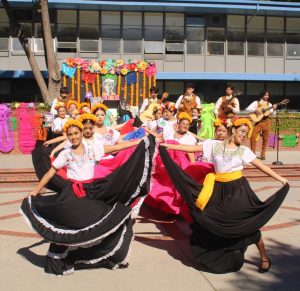
On school grounds, there are several different dedicated clubs and organizations on campus that place the spotlight on this Mexican holiday, such as the performances held by Ballet Folklorico and the gorgeous sounds of horned instruments filling the air with our mariachi band.
PEACE Spanish teacher, Ms. Diaz discusses how there’s minimal coverage or knowledge in schools regarding other ways Spanish-speaking countries celebrate the Day of the Dead. “With Dia de los Muertos being celebrated on campus, I think a lot of students feel more seen — people knowing that they’re actually being represented at school.”


Joaquin Chavez • Nov 18, 2025 at 2:12 pm
Being involved in the Latinx and Hispanic community as President of the Ballet Folklorico Club and Vice-President of La Raza Club here at Millikan, I applaud this article for describing the celebration and tradition that comes with Dia de los Muertos. Intricately describing not only traditions like ofrendas and gatherings offering food and presence but also what Dia de los Muertos means to individual people was most definitely a strong support for the success of this article. Including quotes from Delila Ostick Perez,who emphasized how much this day meant to her to remember her passed loved ones and also from Ms. Diaz about how bringing Dia de los Muertos to Millikan helps students feel seen, adds another element to this text that invites the community to connect and be a part of this event. I believe that adding more common beliefs originating from Mexico such as how spirits come to their graves to spend time with their loved ones, in addition to how it was already mentioned that remembrance keeps spirits alive would positively strengthen this acknowledgement as well. Also including how religion is tied to this celebration might appeal and connect to a wider audience and make this article hit home for them.
I would say that, though Dia de los Muertos is celebrated here in the United States, the celebration is much more sophisticated and specific in Mexico and this article would greatly benefit from including this difference. In Mexico, Dia de los Muertos is celebrated on two days, November 1st and November 2nd with the first honoring the souls of the dead children called All Saints’ Day or Dia de los Inocentes (Angelitos). Religion is also more emphasized when celebrating Dia de los Muertos in Mexico whereas in the United States it is used loosely. Also, in the fourth paragraph it is said that Dia de los Muertos is celebrated across the globe and though diffusion has spread its customs and beliefs to other places, this celebration is mostly celebrated in Mexico and Central America. Incorporating the difference and intensity of tradition between the United States and Mexico and accurately portraying the region’s participation and influence of Dia de los Muertos will reinforce this already thriving article.
This text does great work at illustrating the performances and celebrations that we had for Dia de los Muertos here at Millikan too. I am grateful for the recognition that our Ballet Folklorico Club was given after we performed on the rally stage to celebrate and embrace the spirits of those who have passed. Adding that members of La Raza Club and ASB helped decorate the rally stage’s altar and ofrenda with Marigolds (or Campasuchil) and with pictures of the deceased would also be much appreciated. I would also shout out that the Mariachi band that performed at Millikan that day was from CSULB and we were very privileged to have them. Overall, this article does a great job at portraying the Dia de los Muertos celebration but a few more additions about its core beliefs, history, and regional differences would add depth to help readers understand where it came from and how it is celebrated beyond what they have already seen.
Kaylie Rodriguez-Adame • Nov 18, 2025 at 11:46 am
This article well explains the background of Dia de los Muertos and the festivities that people celebrate every year for their lost loved ones by including food, color, and activities they looked forward to everyday.. From growing up in a Mexican household, I have always taken in the admiration for Dia de los Muertos and absolutely loved the amount of vibrant colors used on the ofrendas. Lambkins flawlessly expresses the love and sentiment that she feels towards this day of celebration and was quickly able to grab my attention from the nostalgic elements that she mentions in her article. She is able to form a mental visual that has a meaningful connection attached to it by including the traditions and memories that Dia de los Muertos represents. She clearly demonstrates in this article the emotional message that Dia de los Muertos sends to everyone, especially those grieving, death isn’t the end of a story, rather the continuation to the next chapter.
Samantha Oropeza • Nov 17, 2025 at 1:40 pm
This article does a great job of explaining what Dia de Los Muertos is, how it’s celebrated, and the impact that this celebration has on the Millikan community. Additionally, the descriptive words and phrases used in the article help to portray the celebration and how it’s celebrated in Mexico. Furthermore, she explains how Dia de Los Muertos is a celebration and show of gratitude for the memory of our loved ones. The photo taken of the folklorico students with the mariachi band and ofrenda in the background shows how Dia de Los Muertos is a vibrant and colorful celebration. Also, including interviews from both Ms. Diaz and Delila Ostik Perez help show how much this celebration means to the Millikan community. In short, Lambkins does an excellent job of describing the Dia de Los Muertos celebration.
Liliana Barrios • Nov 17, 2025 at 11:32 am
On November 4, 2025, Wisdom Grace Lambkins wrote an article titled “Dia de los Muertos”. I love that this article recognizes the true meaning of Dia de los Muertos and is informing others about how special this tradition is. I believe that culture being celebrated at our school is very important for others to feel as though they belong while also spreading awareness. The day of the dead is a precious tradition that helps us feel close to those who have passed and never forget they will always live on in our hearts.
Implementing quotes from our community is really special and further adds to the credibility of the article. This tradition allows us to remember those who have passed on without feeling sadness and I really love that this article emphasizes that. Including the clubs who are responsible for allowing us to celebrate this special tradition is very informative. I really appreciate this holiday being recognized and written about because remembering our loved ones who have passed on is very special.
Gabriela Bonilla • Nov 17, 2025 at 11:29 am
I really liked how the writer explained Dia de los Muertos in a way that was clear and descriptive. The opening used simple imagery that helped me picture the marigolds, candles, and decorations. It set a good scene and helped me understand the importance of the holiday and how it is celebrated.
I also liked that the article included a student quote from Delila Ostick Perez. Her explanation of what the holiday means to her made the topic feel personal and relatable. I loved how she showed how real students connect with tradition.
Another strong part of the article was the section about how Long Beach Schools celebrate. Mentioning teachers’ clubs and on-campus ofrendas helped show how the tradition is shared at school and why it matters to students. Ms. Diaz’s comment about representation added an important point, and it made me appreciate how the article highlights student voices and cultural visibility on campus.