













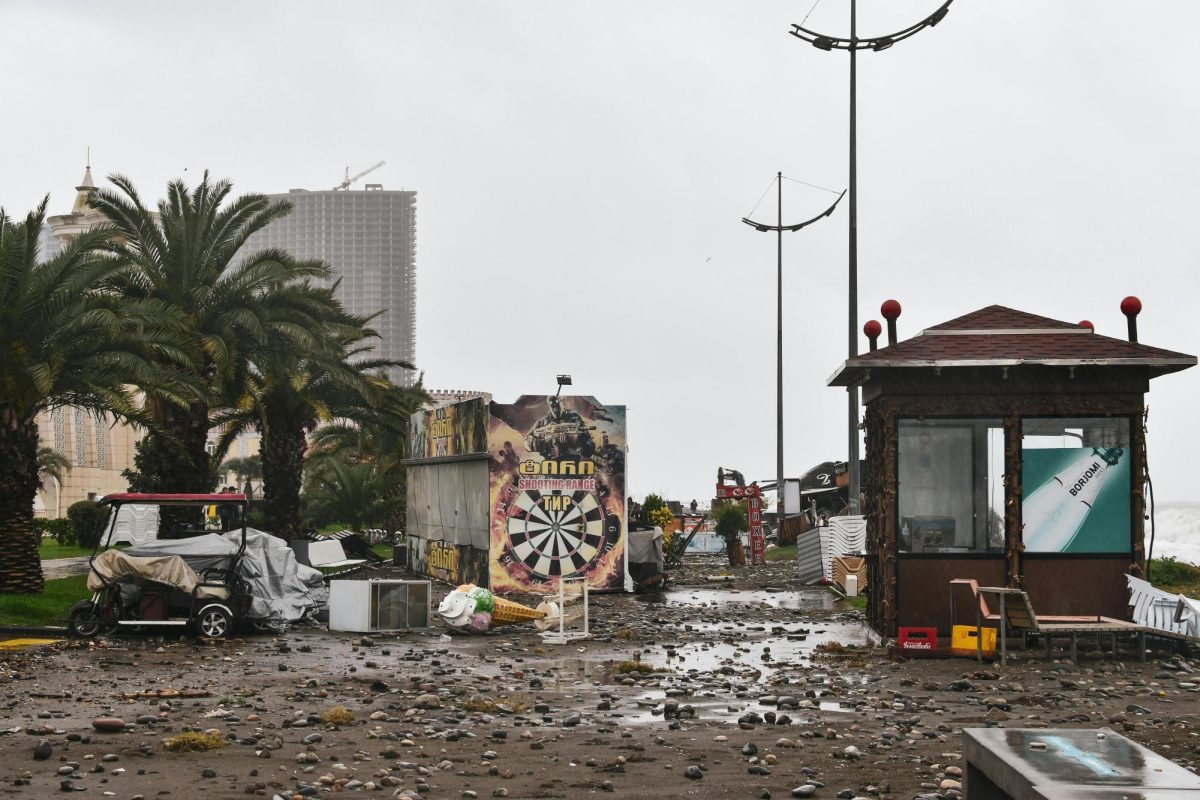
Hurricane Katrina was a devastating force that made landfall to the Central Gulf Coast of the United States, causing widespread panic and destruction primarily to New Orleans, on Aug. 29, 2005. A documentary released July 2025 briefed its audience on systemic issues and survivors stories, in celebration of the disaster’s 20th anniversary.
Many residents of New Orleans in the lower-income neighborhoods, lacked the resources to evacuate, or were not given the proper necessities. Having no form of transportation, money for hotels, medical help, or alternative housing outside of the cities.
Dr Ruddman, Millikan’s AP Government teacher mentioned, “years of underfunding had led to a weak infrastructure incapable of withstanding a disaster.”
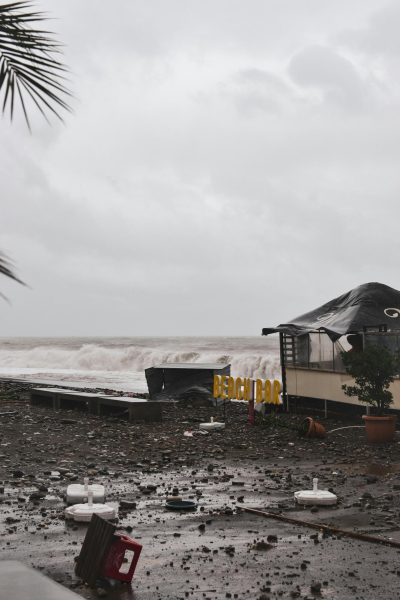
Communities with wealth and privilege could leave or recover, having adequate resources available to them, while those marginalized groups faced displacement, economic devastation, and trauma.
Cadence Mercado, a student in Peace stated, “we have seen this time and time again where racism is ingrained into our institutions. So it’s not shocking knowing that there were deliberate measures taken to deprioritize and neglect people of color who were impacted by Katrina leaving them stranded and with little to no help from the government.”
The local governments struggled with communication creating confusion and panic, state authorities were slow to coordinate relief efforts, and federal agencies such as FEMA were unprepared for something of this magnitude.
Lieutenant General Honoré says, “I call that the ‘patience of the poor’. I grew up that way, you learn to wait. When you’re poor in America, you’re not free, and when you’re poor you learn to have patience, you lose choices when you’re poor.”
This storm intensified existing inequalities, harming those who were already marginalized; proving the infrastructure failures, poor planning, and underfunding. This has continued to trickle into modern society, it was a social and political turning point.
These population shifts, emergency management reforms, awareness of climate change, and infrastructure all affect today’s social divide.

Ryden Kim • Oct 14, 2025 at 1:31 pm
This article really goes into depth about the aftermath of Hurricane Katrina. The article focuses on how bad the aftermath really was and gives in-depth explanations on how the conditions were for the victims who lost their homes and loved ones.
I also thought that how the author used a quote from a Millikan teacher about the situation was very interesting. It’s interesting to get a teacher’s point of view on a situation that has different views because it tells you about what they think could have prevented it. Furthermore, I also think that this article is written very well in terms of connecting with the audience and explaining to them that there were very unfortunate people who had to experience this disaster.
Lastly, this article does a good job of including the harsh but true details. For example, the article talks about how people of color were neglected when taken into consideration by the government of who to prioritize helping. Although harsh and hard to believe, I find it fascinating to learn about the more gruesome side of the tragedy.
Landon Applegate • Oct 14, 2025 at 11:50 am
After reading, I understand how finances play a huge role in a city’s ability to withstand natural disasters such as hurricanes, and steps towards improving infrastructure should definitely be considered moving forward in order to reduce the amount of damage. I also recognize how financially challenged individuals, especially those who reside in struggling communities in lower-lying areas may have a difficult time recovering after a natural disaster compared to those who are more wealthy. I also agree that the poorer communities will have a slower recovery time most likely due to the fact that they are not able to have access to loans and have limited access to jobs. I admire the creativity of focusing on the idea of lower-income communities which are often overlooked in catastrophic disasters because they are grouped together with the wealthy. However, it is worth noting that Community Emergency Response Teams (CERT) were deployed to those struggling areas to support the residents.
I am a part of the Long Beach CERT whose mission is to “Do the greatest good for the greatest number of people”. Long Beach CERT volunteers work with the Long Beach Fire Department in order to assist a community’s disaster preparation and recovery. Although I am still awaiting until November of 2025 to complete my hybrid hands-on training, I am still completed the online course and am knowledgeable with skills that can be used to assist others in times of crisis. CERT volunteers are leaders and provide assistance to those around them after a major disaster until professional emergency services arrive. After Hurricane Katrina passed through the lower-income neighborhoods of New Orleans, a CERT team from Battery Park City, New York, were deployed and provided support alongside other non-profit and volunteer organizations like the American Red Cross and the Medical Reserve Corps. So, while there were coordinating challenges that made it difficult to take action, poorer communities in New Orleans still received a great deal of support from people taking the time and effort without being paid to help out because it is their way of life.
This is a very interesting topic and should be explored in more detail in order to uncover all the assistance that was provided not only to New Orleans as a whole, but also just the poor communities distinctively. I am fascinated with community involvement after disasters. It reveals who cares not only about themselves and their families, but also those who go the extra mile to give back to their community. I wonder why the NOLA Ready program in New Orleans, a very similar program to CERT, did not document their contributions to assisting with Hurricane Katrina. This makes me question if they had any noteworthy impact at all and if the program requires a self-evaluation to highlight where they can improve.
Micah • Oct 14, 2025 at 9:53 am
I read this article recently and enjoyed how it helped me gain a greater understanding of the economical impacts of natural disasters on the land. Choung made the idea that even amidst a disaster there was a gap between impoverished and privileged neighborhoods. Chuong demonstrated this gap when she notes that “Communities with wealth and privilege could leave or recover, having adequate resources available to them, while those marginalized groups faced displacement, economic devastation, and trauma. Communities with wealth and privilege could leave or recover, having adequate resources available to them, while those marginalized groups faced displacement, economic devastation, and trauma.” The entire article highlights the difference in privilege for both classes.
I also enjoyed how the article highlighted the further consequences of the disasters on the impoverished population, but I believe It could have been helpful to add some parts about the difference in the effect on the privileged compared to the impoverished. I think it would provide further insight on how we need to help support the impoverished. I also believe it would help to further highlight the disparity between classes.
I appreciated the article’s information on the under-funding of relief programs that added to the panic and struggle. I found it interesting to learn that even disaster relief organizations were unprepared to support the people affected. Chuong highlighted these topics and used them to provide excellent information for those unfamiliar with the topic. Overall the article was very informative and added a lot of understanding to the effects of natural disasters.
Luna Fram-Strong • Oct 14, 2025 at 9:51 am
I found this article to be striking, and although the systematic oppression of those less privileged is not new, nor surprising, the ideas brought forth by this article are deeply saddening and make you question the systems that have been set in place.
It is specifically mentioned that “When you’re poor in America, you’re not free….” This is obvious when you look at any of the aspects of daily life. People in poverty often have less access to education as well as poorer living standards. Though it is surprising when you think of the United States as a country that was built on the Enlightenment ideals of freedom and equality. For a country built on these ideals it makes no sense as to why a social class, something one is most likely born into and not something within their control, is something that so severely limits ones freedom.
However, when you look at the United States in the context of its history, that being the genocide of Native Americans as well as the systemic oppression of Black people through the lasting effects of slavery, it becomes clear as to how this disaster and the response to it came about.
As is mentioned, racism is ingrained in our institutions, which I praise this article for bringing up as it is not simply a matter of who had the means to evacuate but rather why did these people not have the means to evacuate. The systemic oppression of people of color is why they are so disproportionately affected by poverty. Through no fault of their own, the systems continue to oppress them and others. Furthermore, understanding the root of this oppression is so important as although the abandonment of impoverished people by the government is largely due to the oppression of people of color it doesn’t just affect people of color it affects the entirety of the nation and in continuation the world. Which is echoed in the popular statement ‘We are not free until we are all free.’
I commend this article for bringing up these important issues, especially is such a divided and polarizing time such as the one we are in currently.
Avery Paul • Oct 13, 2025 at 1:59 pm
Dear Corydon Editor,
On October 13, 2025, Jade Chuong wrote an article titled “The Protection of the Privileged Amidst Disaster”. Chuong’s main point throughout the article was how poverty affects people during natural disasters. It is important, especially when reflecting upon such a tragedy as Hurricane Katrina was, to have a lens of empathy, which I feel was done respectfully. I think the quote, “When you’re poor in America, you’re not free,” was well-delivered and a proper addition, because it rang true during that awful event. I find the timing of the article notable as well, with the 20th anniversary of the disaster, as well as the release of the Netflix documentary, which sparked new discourse. I could suggest that Chuong may further develop the point that specifies the fault of the government in its failure to protect those living below the poverty line in New Orleans during the catastrophe. Overall, this article brought an important subject to light, the largely preventable disaster of Hurricane Katrina, which is crucial to improving the conditions for disaster management.
Sincerely,
Avery Paul
Oliver Sammelius • Oct 13, 2025 at 1:42 pm
This article does an outstanding job of highlighting the racial undertones surrounding the Hurricane Katrina disaster. I appreciate the quotes from multiple different perspectives and feel that it adds great value to the article and creates credibility. Additionally, this allows the reader to understand the perspectives of multiple individuals who have knowledge on this particular disaster and the events that surrounded it.
To add on, the article’s emphasis on privilege and its effect on disaster relief following Katrina gives the reader something to think about. The article does a good job at highlighting the inequality and systematic racism that played a role in the relief and preparation of this disaster. However, I believe that adding information on how in the past New Orleans has prioritized the communities of wealthier, white citizens over minorities living in more impoverished areas of the city. Such as in 1927, when flooding of the Mississippi River led to the artificial breaching of levees which would lead to flooding in predominantly Black neighborhoods. I believe that this would add context and background to the topic, but overall the article is greatly informative as it is.
All in all, this is a great article that achieves its goal of educating readers on the consequences of Hurricane Katrina and how inequality played a part in this natural disaster. The quotes from multiple sources adds credibility and gives the reader another perspective to view this event from. This article is very informative and provides lots of important information on the complexity of disaster relief and how systematic oppression sometimes plays a role in preparation and recovery.
Liam Balmeo • Oct 13, 2025 at 1:34 pm
I recently read this while exploring the latest articles among the Corydon, and her work has left a lasting imprint on my understanding of natural disasters and its impact on various communities. Chuong emphasizes the disparity between impoverished and privileged communities both facing natural disasters such as Hurricane Katrina, and as she stated, “Communities with wealth and privilege could leave or recover, having adequate resources available to them, while those marginalized groups faced displacement, economic devastation, and trauma”. Not only does she mention this once, but the entire article is streamlined in differences between both social classes. I applaud her commitment to this subject, especially in a period of time that diminishes numerous underserved and underrepresented communities.
I admire this article in its entirety, and am fascinated by the topic that is discussed. I believe that the strength of this dilemma is deeply rooted in generational suffering. The cycle of poverty can be seen as a leading factor in the economic inequalities as subjects such as racism and prejudice against certain communities have continued throughout time. I wish that this point was discussed further and dives into the historic racism that the community impacted by Hurricane Katrina faced. Similarly, I believe that the differences in socioeconomic status is a key factor in the treatment of certain groups in crisis. The wealth of certain provinces or counties, for example, play a crucial role in their amount of first aid and treatment during that time. If a specific difference in treatment by county or province, then the inequity would be analyzed on a deeper level.
Altogether, “The Protection of the Privileged Amidst Disaster” is a well-crafted and polished piece that has caused many, including myself, to reflect upon a historic disaster in this nation’s history. I appreciate the effort taken to create this piece, and its lasting impact on its audience.